Not that kind of native-ity: endemism and invasion of Australia

The endemics of Australia

Australia is world-renowned for the abundant and bizarre species that inhabit this wonderful island continent. We have one of the highest numbers of unique species in the entire world (in the top few!): this is measured by what we call ‘endemism’. A species is considered endemic to a particular place or region if that it is the only place it occurs: it’s completely unique to that environment. In Australia, a whopping 87% of our mammals, 45% of our birds, 93% of our reptiles, 94% of our amphibians 24% of our fishes and 86% of our plants are endemic, making us a real biodiversity paradise! Some lists even label us as a ‘megadiverse country’, which sounds pretty awesome on paper. And although we traditionally haven’t been very good at looking after it, our array of species is a matter of some pride to Aussies.
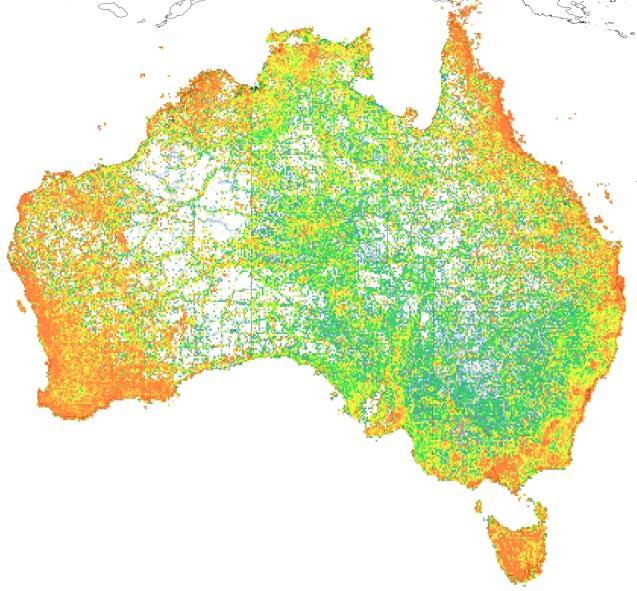
Endemism map
A map representing the relative proportion of endemic species in Australia, generated through the Atlas of Living Australia. The colours range from no (white; 0% endemics) or little (blue) to high levels of endemism (red; 100% of species are endemic). As you can see, some biogeographic hotspots are clearly indicated (southwest WA, the east coast, the Kimberley ranges).

But the real question is: why are there so many endemics in Australia? What is so special about our country that lends to our unique flora and fauna? Although we naturally associate tropical regions with lush, vibrant and diverse life, most of Australia is complete desert. That said, most of our species are concentrated in the tropical regions of the country, particularly in the upper east coast and far north (the ‘Top End’).

There are a number of different factors which contribute to the high species diversity of Australia. Most notably is how isolated we are as a continent: Australia has been separated from most of the rest of the world for millions of years. In this time, the climate has varied dramatically as the island shifted northward, creating a variety of changing environments and unique ecological niches for species to specialise into. We refer to these species groups as ‘Gondwana relicts’, since their last ancestor with the rest of the world would have been distributed across the supercontinent Gondwana over 100 million years ago. These include marsupials, many birds groups (including ratites and megapodes), many fish groups and a plethora of others. A Gondwanan origin explains why they are only found within Australia, southern Africa and South America (the closest landmass that was also historically connected to Gondwana).

Early arrivals and naturalisation to the Australian ecosystem 

But not all of Australia’s species are so ancient and ingrained in the landscape. As Australia drifted northward and eventually collided with the Sunda plate (forming the mountain ranges across southeast Asia), many new species and groups managed to disperse into Australia. This includes the first indigenous people to colonise Australia, widely regarded as one of the oldest human civilisations and estimated to have arrived down under over 65 thousand years ago.

Eventually, this connection also brought with them one of our most iconic species; the dingo. Estimates of their arrival dates the migration at around 6 thousand years ago. As Australia’s only ‘native’ dog, there has been much debate about its status as an Australian icon. To call the dingo ‘native’ implies it’s always been there: but 6 thousand years is more than enough time to become ingrained within the ecosystem in a stable fashion. So, to balance the debate (and prevent the dingo from being labelled as an ‘invasive pest’ unfairly), we often refer to them as ‘naturalised’. This term helps us to disentangle modern-day pests, many of which our immensely destructive to the natural environment, from other species that have naturally migrated and integrated many years ago.

Patriotic dingo
Although it may not be a “true native”, the dingo will forever be a badge of our native species pride.

Invaders of the Australian continent

Of course, we can never ignore the direct impacts of humans on the ecosystem. Particularly with European settlement, another plethora of animals were introduced for the first time into Australia; these were predominantly livestock animals or hunting-related species (both as predators and prey). This includes the cane toad, widely regarded as one of the biggest errors in pest control on the planet.

When European settlers in the 1930s attempted to grow sugar cane in the far eastern part of the country, they found their crops decimated by a local beetle. In an effort to eradicate them, they brought over a species of cane toad, with the idea that they would control the beetle population and all would be well. Only, cane toads are particularly lazy and instead of targeting the cane beetles, they just thrived on all the other native invertebrates around. They’re also very resilient and adaptable (and highly toxic), so their numbers exploded and they’ve since spread across a large swathe of the country. Their toxic skin makes them fatal food objects for many native predators and they strongly compete against other similar native animals (such as our own amphibians). The cane toad introduction of 1935 is the poster child of how bad failed pest control can be.
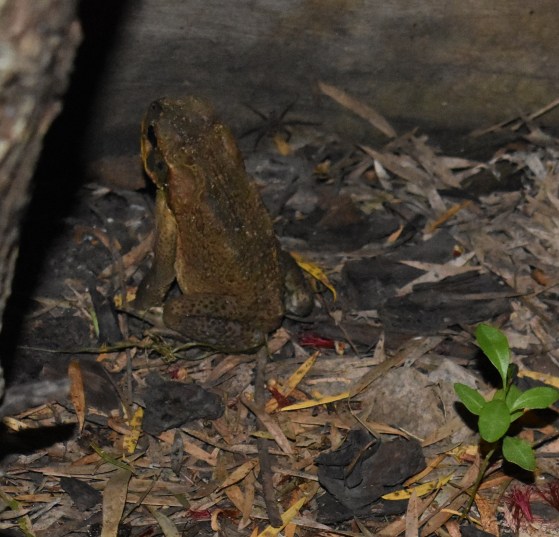
DSC_0867_small
This guy here, he’s a bastard. Spotted in my parent’s backyard in Ipswich, QLD. Source: me, with spite.

But is native always better?

History tells a very stark tale about the poor native animals and the ravenous, rampaging pest species. Because of this, it is a widely adopted philosophical viewpoint that ‘native is always best’. And while I don’t disagree with the sentiment (of course we need to preserve our native wildlife, and not the massively overabundant pests), there are rare examples where nature is a little more complicated. In Australia, this is exemplified in the noisy miner.

The noisy miner is a small bird which, much like its name implies, is incredibly noisy and aggressive. It’s highly abundant, found predominantly throughout urban and suburban areas, and seems to dominate the habitat. It does this by bullying out other bird species from nesting grounds, creating a monopoly on the resource to the exclusion of many other species (even larger ones such as crows and magpies). Despite being native, it seems to have thrived on human alteration of the landscape and is a serious threat to the survival and longevity of many other species. If we thought of it solely under the ‘nature is best’ paradigm, we would dismiss the noisy miner as ‘doing what it should be.’ The truth is really more of a philosophical debate: is it natural to let the noisy miner outcompete many other natives, possibly resulting in their extinction? Or is it only because of human interference (and thus is our responsibility to fix) that the noisy miner is doing so well in the first place? It’s not a simple question to answer, although the latter seems to be incredibly important.

Noisy miner harassing currawong
An example of the aggressive behaviour of the noisy miner (top), swooping down on a pied currawong (bottom). Despite the size differences, noisy miners will frequently attempt to harass and scare off other larger birds. Image source: Bird Ecology Study Group website.

The amazing biodiversity of Australia is a badge of honour we should wear with patriotic pride. Conservation efforts of our endemic fauna are severely limited by a lack of funding and resources, and despite a general acceptance of the importance of diverse ecosystems we remain relatively ineffective at preserving it. Understanding and connecting with our native wildlife, whilst finding methods to control invasive species, is key to conserving our wonderful ecosystems.

Why we should always pander to diversity

Diversity in the natural world

‘Diversity’ is a term that gets used a lot these days, albeit usually in reference to social changes and structures. However, diversity is not merely a human construct and reflects an extremely important aspect of the natural world at a variety of levels. From the smallest genes to the biggest ecosystems, diversity is a trait that confers a massive range of benefits to individuals, populations, species and even the entire globe. Let’s dissect this diversity down at different scales and see how beneficial it can be.

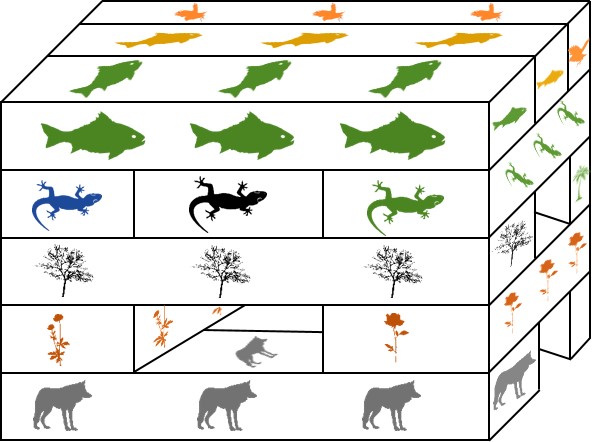
Hierarchy of diversity
The generalised hierarchy at life, with diversity being an important component of each tier. At the smallest tier, genes underpin all life. The collection of genetic diversity is often summarised into a population (as a single cohesive genetic unit). Several populations can be pooled together into a single (usually) cohesive speciesDifferent species are then components of a larger community (which in turn are components of a broader ecosystem).

Genetic diversity

At the smallest scale in the hierarchy of genetic differentiation, we have the genes themselves. It is a well-established concept that having a diversity of genetic variants (alleles) within a population or species is critical to their future adaptation, evolution and persistance. This is because different alleles will have different benefits (or costs) depending on the environmental pressure that influences them; natural selection might favour one allele over another at one time, but a different one as the pressure changes. Having a higher number of alleles within the population or species means that there is a greater chance at least a few individuals will possess an adaptive gene with the changing environment (which we know can be quite rapid and very, very strong). The diversity serves as a ‘buffer’ against extinction; evolution by natural selection functions best when there are many options to choose from.

Without this diversity, species run the risk of having no adaptive genes at the ready to deal with a selective pressure. Either a new adaptive gene must mutate (or come about in other ways, such as through gene flow from another population or species) or the population/species will suffer and potentially go extinct. As strong selection causes the species to dwindle, it enters what is referred to as the ‘extinction vortex’. Without genetic diversity, they can’t adapt: thus, more individuals die off, causing more genetic diversity to be lost from the population. This pattern is a vicious cycle which can inevitably destroy species (without serious intervention).

Extinction vortex
A very dramatic representation of the extinction vortex.

For this reason, captive breeding programs aim to maintain as much of the genetic diversity of the original population as possible. This reduces the probability of entering a downward extinction spiral from inbreeding depression and helps to maintain populations into the future (both the captive one and the wild population when we reintroduce individuals into the wild).

“Population”  diversity

Because genetic diversity is critically important for species survival, we must also try to preserve the diversity of the entire gene pool of a species. This means conserving highly genetically differentiated populations within a species as a priority, as they may be the only ones that possess the necessary adaptive genes to save the rest of the species. This adaptive genetic variation can then be introduced into other populations in genetic rescue programs and serve as a means to semi-naturally allow the species to evolve. Evolutionarily-significant units (ESUs) are one measure of the invaluable nature of genetically unique populations.

Although many more traditional conservationists strongly believe that ESUs should be managed entirely independently of one another (to preserve their evolutionary ‘pedigree’ and prevent the risk of outbreeding depression), it has been suggested that the benefit of genetic rescue in many cases significantly outweighs this risk of outbreeding depression. For some species, this really is an act of rescue: they are at the edge of extinction, and if we do nothing we condemn them to die out.

Introducing genetic material across populations (or even species!) can generate new functional genes that allow the recipient species to adapt to selective pressures. This might sound very strange, and could be extremely rare, but examples of adaptive genetic material in one species originating from another species through hybridisation do exist in nature. For example, the black coat of wolves is a highly adaptive trait in some populations and is encoded for by the Melanocortin 1 receptor (Mc1r) gene. However, the specific mutation in Mc1r gene that generates the black coat colour actually first originated in domestic dogs; when wild wolves and domestic dogs interbred, this mutation was transferred into the wolf gene pool. Natural selection strongly favoured this new variant, and it very rapidly underwent strong positive selection. Thus, the adaptiveness of black wolves is thanks to a domestic dog mutation!

Species diversity

At a higher level of the hierarchy, the diversity of species within a particular community or ecosystem has been shown to be important for the health and stability of said community. Every species, however small or seemingly unimpressive, plays a role in the greater ecosystem balance, through interactions with other species (e.g. as predator, as prey, as competitor) and the abiotic environment. While some species are known to have very strong impacts on the immediate ecosystem (often dubbed ‘keystone species’, such as apex predators), all species have some influence on the world around them (we’re especially good at it).

Species interactions flowchart

The overall health and stability of an ecosystem, as well as the benefits it can provide to all living things (including humans) is largely determined by the diversity of species. For example, ‘habitat engineers’ are types of species that, by altering the physical environment around them (such as to build a home), directly provide new habitat for other species. They are a fundamental underpinning of many incredibly vibrant ecosystems; think of what a reef system would look like if there were no corals in it. There’d be no anemones growing colourfully; no fish to live in them; no sharks to feed on these non-existent fish. This is just one example of a complex ecosystem that truly relies on its inhabiting species to function.

Ecosystem jenga
Much like Jenga, taking out one block (a species) could cause the entire stack (the ecosystem) to collapse in on itself. Even if it stands up, however, the system will still be weaker without the full diversity to support it.

Protecting our diversity

Diversity is not just a social construct and is an important phenomenon in nature, at a variety of different levels. Preserving the full diversity of life, from genetic diversity within populations and species to full species diversity within ecosystems, is critical to maintaining healthy and robust natural systems. The more diversity we have at each level of this hierarchy, the greater robustness and security we will have in the future.

Surviving the Real-World Apocalypse

The changing world

Climate change seems to be the centrefold of a large amount of scientific research and media attention, and rightly so: it has the capacity to affect every living organism on the planet. It’s our duty as curators and residents of Earth to be responsible for our influences on the global environmental stage. While a significant part of this involves determining causes and solutions to our contributions to climate change, we also need to know how extensive the effects will be: for example, how can we predict how well species will do in the future?

Predicting the effect of climate change on all of the world’s biodiversity is an immense task. Climate change itself is a complicated system, and causes diverse, interconnected and complex alterations to both global and local climate. Adding on top of this, though, is that climate affects different species in different ways; where some species might be sensitive to some climatic variables (such as rainfall, available sunlight, seasonality), others may be more tolerant to the same factors. But all living things share some requirements, so surely there must be some consistency in their responses to climate change, right?

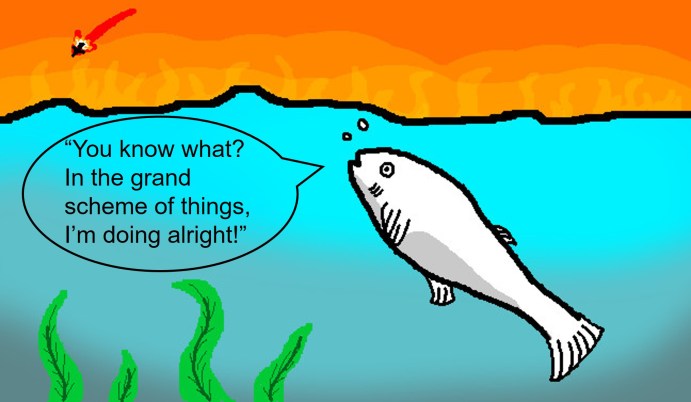
Apocalypse 2
Lucky for Mr Fish here, he’s responding to a (very dramatic) climate change much, much better than his bird counterpart.

How predictable are species responses to climate change?

Well, evidence would surprisingly suggest not. Many species, even closely related ones, can show very different responses to the exact same climatic pressures or biogeographical events. There are a number of different traits that might affect a species’ ability to adapt, particularly their adaptive genetic diversity (which underpins ‘adaptive potential’). Thus, we need good information of a variety of genetic, physiological and life history traits to be able to make predictions about how likely a species is to adapt and respond to future (and current) climate changes.

Although this can be hard to study in species of high extinction risk (getting a good number of samples is always an issue…), traditional phylogeographic methods might help us to make some comparisons. See, although the modern Earth is rapidly changing (undoubtedly influenced by human society), the climate of the globe has always varied to some degree. There has always been some tumultuousness in the climate and specific Earth history events like volcano eruptions, sea-level changes, or glaciation periods (‘ice ages’) have had diverse effects on organisms globally.

Using comparative phylogeography to predict species responses

One tool for looking at how different species have, in the past, responded to the same biogeographical force is the domain of ‘comparative phylogeography’. Phylogeography itself is something we have discussed before: the ‘comparative’ aspect simply means comparing (with complex statistical methods) these patterns across different and often unrelated species to see how universal (‘congruent’) or unique (‘incongruent’) these patterns are among species. The more broadly we look at the species community in the region, the more we can observe widespread effects of any given environmental or geographical event: if we only look at fish, for example, we might not to be able to infer what response mammals, birds or invertebrates have had to our given event. Sometimes this still meets the scale we wish to focus; other times, we want to see how all the species of an area have been affected.

Actual island diagram
An (very busy) example of different species responses to a single environmental event. In this example, we have three species (a fish, a lizard, and a bird) all living on the same island. In the middle of the island, there is a small mountain range (A). At this point in time, all three species are connected across the whole island; fish can travel via lakes and wetlands (green arrows), lizards can travel across the land (blue arrow) and birds can fly anywhere. However, as the mountain range grows with tectonic movements, the waterways are altered and the north and south are disconnected (B). The fish species is now split into two evolutionarily separate groups (green and gold), while lizards and birds are not. As the range expands further, however, the dispersal route for lizards is cut off, causing them to eventually also become separated into blue and black groups (C). Birds, however, have no problems flying over the mountain range and remain one unified and connected orange group over time (D). Thus, each species has a different response to the formation of the mountain range.
Evol history of island diagram
The phylogenetic history of the three different species in the above example. As you can see, each lineage has a slightly different pattern; birds show no divergences at all, whereas the timing of the lizard and fish N/S splits are different (i.e. temporally incongruent).

Typically, comparative phylogeographic studies have looked at the neutral components of species’ evolution (as is the realm of traditional phylogeography). This includes studying the size of populations over time, how well connected they are and were, what their spatial patterns are and how these relate to the environment. Comparing all of these patterns across species can allow us to start painting a fuller picture of the history of biota in a region. In this way, we can start to see exactly which species have shown what responses and start to relate these to the characteristics that allowed them to respond in that certain way (and including adaptation in our studies). So, what kinds of traits are important?

What traits matter? Who wins?

Often, we find that life history traits of an organism better dictates how they will respond to a certain pressure than other factors such as phylogeny (e.g. one group does not always do better than another). Instead, individual species with certain physical characteristics might handle the pressure better than others. For example, a fish, bird and snake that are all able to tolerate higher temperatures than other fish, birds or snakes in that region are more likely to survive a drought. In this case, none of the groups (fish, birds or snakes) inherently do better than the other two groups. Thus, it can be hard to predict how a large swathe of species will respond to any given environmental change, unless we understand the physical characteristics of every species.

Climate change risk flowchart
A generalised framework of various factors, and their interactions, on the vulnerability of species under current and future climate changes by Williams et al. 2018. The schematic includes genetic, ecological, physical and environmental factors and how these can interact with one another to alleviate or exacerbate the risk of extinction.

We can also see that other physiological or ecological traits, such as climatic preferences and tolerance thresholds, can be critical for adapting to climatic pressures. Naturally, the genetic diversity of species is also an important component underlying their ability to adapt to these new selective pressures and to survive into the future. Trying to incorporate all of these factors into a projected model can be difficult, but with more data of higher quality we can start to make more refined predictions. But by understanding how particular traits influence how well a species may adapt to a changing climate, as well as knowing the what traits different species have, might just be the key to predicting who wins and who dies in the real-world Game of Thrones.

Fantastic Genes and Where to Find Them

The genetics of adaptation

Adaptation and evolution by natural selection remains one of the most significant research questions in many disciplines of biology, and this is undoubtedly true for molecular ecology. While traditional evolutionary studies have been based on the physiological aspects of organisms and how this relates to their evolution, such as how these traits improve their fitness, the genetic component of adaptation is still somewhat elusive for many species and traits.

Hunting for adaptive genes in the genome

We’ve previously looked at the two main categories of genetic variation: neutral and adaptive. Although we’ve focused predominantly on the neutral components of the genome, and the types of questions about demographic history, geographic influences and the effect of genetic drift, they cannot tell us (directly) about the process of adaptation and natural selective changes in species. To look at this area, we’d have to focus on adaptive variation instead; that is, genes (or other related genetic markers) which directly influence the ability of a species to adapt and evolve. These are directly under natural selection, either positively (‘selected for’) or negatively (‘selected against’).

Given how complex organisms, the environment and genomes can be, it can be difficult to determine exactly what is a real (i.e. strong) selective pressure, how this is influenced by the physical characteristics of the organism (the ‘phenotype’) and which genes are fundamental to the process (the ‘genotype’). Even determining the relevant genes can be difficult; how do we find the needle-like adaptive genes in a genomic haystack?

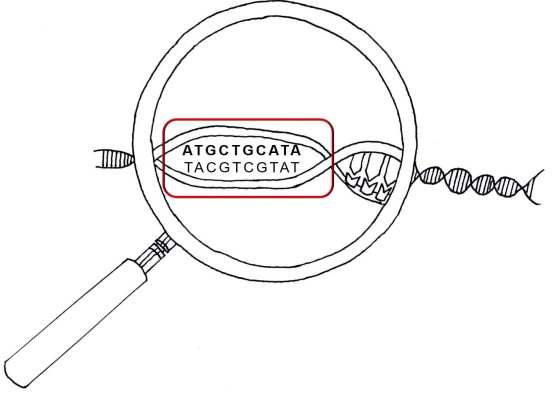
Magnifying glass figure
If only it were this easy.

There’s a variety of different methods we can use to find adaptive genetic variation, each with particular drawbacks and strengths. Many of these are based on tests of the frequency of alleles, rather than on the exact genetic changes themselves; adaptation works more often by favouring one variant over another rather than completely removing the less-adaptive variant (this would be called ‘fixation’). So measuring the frequency of different alleles is a central component of many analyses.

FST outlier tests

One of the most classical examples is called an ‘FST outlier test’. This can be a bit complicated without understanding what FST is actually measures: in short terms, it’s a statistical measure of ‘population differentiation due to genetic structure’. The FST value of one particular population can determine how genetically similar it is to another. An FST value of 1 implies that the two populations are as genetically different as they could possibly be, whilst an FST value of 0 implies that they are genetically identical populations.

Generally, FST reflects neutral genetic structure: it gives a background of how, on average, different are two populations. However, if we know what the average amount of genetic differentiation should be for a neutral DNA marker, then we would predict that adaptive markers are significantly different. This is because a gene under selection should be more directly pushed towards or away from one variant (allele) than another, and much more strongly than the neutral variation would predict. Thus, the alleles that are way more or less frequent than the average pattern we might assume are under selection. This is the basis of the FST outlier test; by comparing two or more populations (using FST), and looking at the distribution of allele frequencies, we can pick out a few alleles that vary from the average pattern and suggest that they are under selection (i.e. are adaptive).

There are a few significant drawbacks for FST outlier tests. One of the most major ones is that genetic drift can also produce a large number of outliers; in a small population, for example, one allele might be fixed (has a frequency of 1, with no alternative allele in the population) simply because there is not enough diversity or population size to sustain more alleles. Even if this particular allele was extremely detrimental, it’d still appear to be favoured by natural selection just because of drift.

Drift leading to outliers diagram
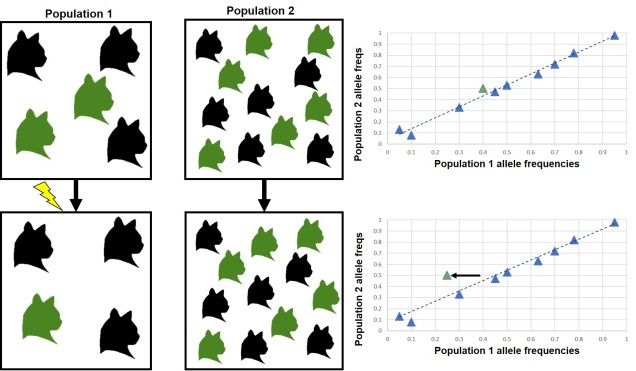
An example of genetic drift leading to outliers, featuring our friends the cat population. Top row: Two cat populations, one small (left; n = 5) and one large (middle, n = 12) show little genetic differentiation between them (right; each triangle represents a single gene or locus; the ‘colour’ gene is marked in green). The average (‘neutral’) pattern of differentiation is shown by the dashed line. Much like in our original example, one cat in the small population is horrifically struck by lightning and dies (RIP again). Now when we compare the frequency of the alleles of the two populations (bottom), we see that (because a green cat died), the ‘colour’ locus has shifted away from the general trend (right) and is now an outlier. Thus, genetic drift in the ‘colour’ gene gives the illusion of a selective loci (even though natural selection didn’t cause the change, since colour does not relate to how likely a cat is to be struck by lightning).

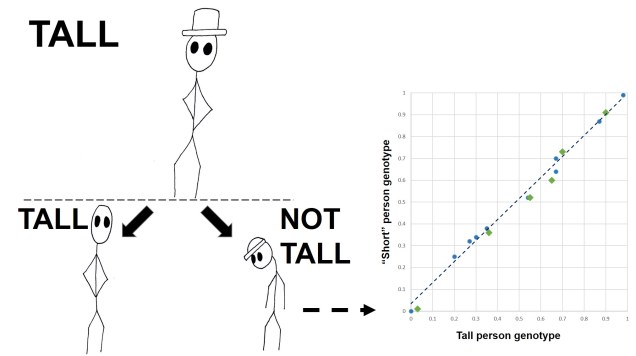
Secondly, the cut-off for a ‘significant’ vs. ‘relatively different but possibly not under selection’ can be a bit arbitrary; some genes that are under weak selection can go undetected. Furthermore, recent studies have shown a growing appreciation for polygenic adaptation, where tiny changes in allele frequencies of many different genes combine together to cause strong evolutionary changes. For example, despite the clear heritable nature of height (tall people often have tall children), there is no clear ‘height’ gene: instead, it appears that hundreds of genes are potentially very minor height contributors.

Polygenic height figure final
In this example, we have one tall parent (top) who produces two offspring; one who is tall (left) and one who isn’t (right). In order to understand what genetic factors are contributing to their height differences, we compare their genetics (right; each dot represents a single locus). Although there aren’t any particular loci that look massively different between the two, the cumulative effect of tiny differences (the green triangles) together make one person taller than the other. There are no clear outliers, but many (poly) different genes (genic) acting together.

Genotype-environment associations

To overcome these biases, sometimes we might take a more methodological approach called ‘genotype-environment association’. This analysis differs in that we select what we think our selective pressures are: often environmental characteristics such as rainfall, temperature, habitat type or altitude. We then take two types of measures per individual organism: the genotype, through DNA sequencing, and the relevant environmental values for that organisms’ location. We repeat this over the full distribution of the species, taking a good number of samples per population and making sure we capture the full variation in the environment. Then we perform a correlation-type analysis, which seeks to see if there’s a connection or trend between any particular alleles and any environmental variables. The most relevant variables are often pulled out of the environmental dataset and focused on to reduce noise in the data.

The main benefit of GEA over FST outlier tests is that it’s unlikely to be as strongly influenced by genetic drift. Unless (coincidentally) populations are drifting at the same genes in the same pattern as the environment, the analysis is unlikely to falsely pick it up. However, it can still be confounded by neutral population structure; if one population randomly has a lot of unique alleles or variation, and also occurs in a somewhat unique environment, it can bias the correlation. Furthermore, GEA is limited by the accuracy and relevance of the environmental variables chosen; if we pick only a few, or miss the most important ones for the species, we won’t be able to detect a large number of very relevant (and likely very selective) genes. This is a universal problem in model-based approaches and not just limited to GEA analysis.

New spells to find adaptive genes?

It seems likely that with increasing datasets and better analytical platforms, many more types of analysis will be developed to delve deeper into the adaptive aspects of the genome. With whole-genome sequencing starting to become a reality for non-model species, better annotation of current genomes and a steadily increasing database of functional genes, the ability of researchers to investigate evolution and adaptation at the genomic level is also increasing.

“Who Do You Think You Are?”: studying the evolutionary history of species

The constancy of evolution

Evolution is a constant, endless force which seeks to push and shape species based on the context of their environment: sometimes rapidly, sometimes much more gradually. Although we often think of discrete points of evolution (when one species becomes two, when a particular trait evolves), it is nevertheless a continual force that influences changes in species. These changes are often difficult to ‘unevolve’ and have a certain ‘evolutionary inertia’ to them; because of these factors, it’s often critical to understand how a history of evolution has generated the organisms we see today.

What do I mean when I say evolutionary history? Well, the term is fairly diverse and can relate to the evolution of particular traits or types of traits, or the genetic variation and changes related to these changes. The types of questions and points of interest of evolutionary history can depend at which end of the timescale we look at: recent evolutionary histories, and the genetics related to them, will tell us different information to very ancient evolutionary histories. Let’s hop into our symbolic DeLorean and take a look back in time, shall we?

Labelled_evolhistory
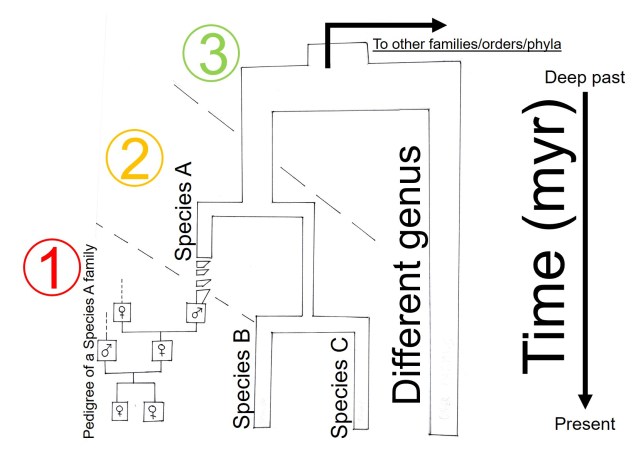
A timeslice of evolutionary history (a pseudo-phylogenetic tree, I guess?), going from more recent history (bottom left) to deeper history (top right). Each region denoted in the tree represents the generally area of focus for each of the following blog headings. 1: Recent evolutionary history might look at individual pedigrees, or comparing populations of a single species. 2: Slightly older comparisons might focus on how species have arisen, and the factors that drive this (part of ‘phylogeography’). 3: Deep history might focus on the origin of whole groups of organisms and a focus on the evolution of particular traits like venom or sociality.

Very recent evolutionary history: pedigrees and populations

While we might ordinarily consider ‘evolutionary history’ to refer to events that happened thousands or millions of years ago, it can still be informative to look at history just a few generations ago. This often involves looking at pedigrees, such as in breeding programs, and trying to see how very short term and rapid evolution may have occurred; this can even include investigating how a particular breeding program might accidentally be causing the species to evolve to adapt to captivity! Rarely does this get referred to as true evolutionary history, but it fits on the spectrum, so I’m going to count it. We might also look at how current populations are evolving differently to one another, to try and predict how they’ll evolve into the future (and thus determine which ones are most at risk, which ones have critically important genetic diversity, and the overall survivability of the total species). This is the basis of ‘evolutionarily significant units’ or ESUs which we previously discussed on The G-CAT.

Captivefishcomic
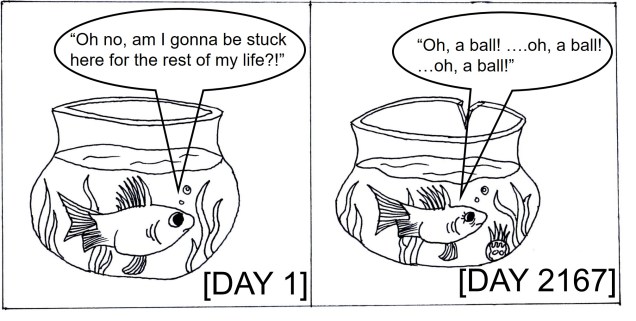
Maybe goldfish evolved 3 second memory to adapt to the sheer boringness of captivity? …I’m joking, of course: the memory thing is a myth and adaptation works over generations, not a lifetime.

A little further back: phylogeography and species

A little further back, we might start to look at how different populations have formed or changed in semi-recent history (usually looking at the effect of human impacts: we’re really good at screwing things up I’m sorry to say). This can include looking at how populations have (or have not) adapted to new pressures, how stable populations have been over time, or whether new populations are being ‘made’ by recent barriers. At this level of populations and some (or incipient) species, we can find the field of ‘phylogeography’, which involves the study of how historic climate and geography have shaped the evolution of species or caused new species to evolve.

Evolution of salinity
An example of trait-based phylogenetics, looking at the biogeographic patterns and evolution/migration to freshwater in perch-like fishes, by Chen et al. (2014). The phylogeny shows that a group of fishes adapted to freshwater environments (black) from a (likely) saltwater ancestor (white), with euryhaline tolerance evolving two separate times (grey).

One high profile example of phylogeographic studies is the ‘Out of Africa’ hypothesis and debate for the origination of the modern human species. Although there has been no shortage of debate about the origin of modern humans, as well as the fate of our fellow Neanderthals and Denisovans, the ‘Out of Africa’ hypothesis still appears to be the most supported scenario.

human phylogeo
A generalised diagram of the ‘Out of Africa’ hypothesis of human migration, from Oppenheimer, 2012. 

Phylogeography is also component for determining and understanding ‘biodiversity hotspots’; that is, regions which have generated high levels of species diversity and contain many endemic species and populations, such as tropical hotspots or remote temperate regions. These are naturally of very high conservation value and contribute a huge amount to Earth’s biodiversity, ecological functions and potential for us to study evolution in action.

Deep, deep history: phylogenetics and the origin of species (groups)

Even further back, we start to delve into the more traditional concept of evolutionary history. We start to look at how species have formed; what factors caused them to become new species, how stable the new species are, and what are the genetic components underlying the change. This subfield of evolution is called ‘phylogenetics’, and relates to understanding how species or groups of species have evolved and are related to one another.

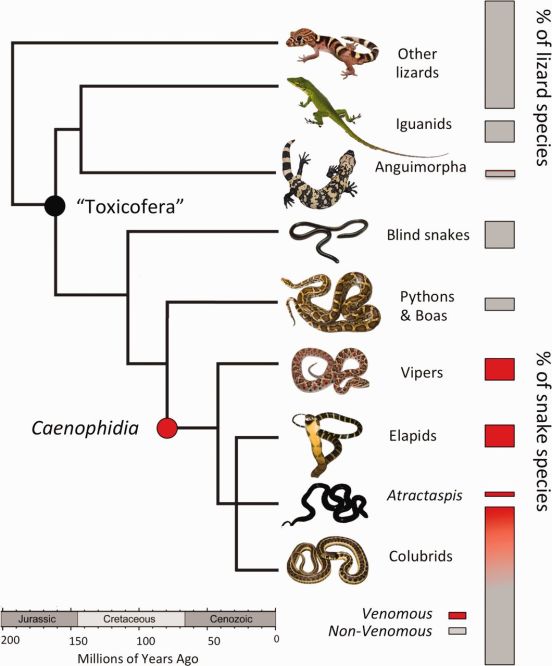
Sometimes, this includes trying to look at how particular diagnostic traits have evolved in a certain group, like venom within snakes or eusocial groups in bees. Phylogenetic methods are even used to try and predict which species of plants might create compounds which are medically valuable (like aspirin)! Similarly, we can try and predict how invasive a pest species may be based on their phylogenetic (how closely related the species are) and physiological traits in order to safeguard against groups of organisms that are likely to run rampant in new environments. It’s important to understand how and why these traits have evolved to get a good understanding of exactly how the diversity of life on Earth came about.

evolution of venom
An example of looking at trait evolution with phylogenetics, focusing on the evolution of venom in snakes, from Reyes-Velasco et al. (2014). The size of the boxes demonstrates the number of species in each group, with the colours reflecting the number of venomous (red) vs. non-venomous (grey) species. The red dot shows the likely origin of venom.

Phylogenetics also allows us to determine which species are the most ‘evolutionarily unique’; all the special little creatures of plant Earth which represent their own unique types of species, such as the tuatara or the platypus. Naturally, understanding exactly how precious and unique these species are suggests we should focus our conservation attention and particularly conserve them, since there’s nothing else in the world that even comes close!

Who cares what happened in the past right? Well, I do, and you should too! Evolution forms an important component of any conservation management plan, since we obviously want to make sure our species can survive into the future (i.e. adapt to new stressors). Trying to maintain the most ‘evolvable’ groups, particularly within breeding programs, can often be difficult when we have to balance inbreeding depression (not having enough genetic diversity) with outbreeding depression (obscuring good genetic diversity by adding bad genetic diversity into the gene pool). Often, we can best avoid these by identifying which populations are evolutionarily different to one another (see ESUs) and using that as a basis, since outbreeding vs. inbreeding depression can be very difficult to measure. This all goes back to the concept of ‘adaptive potential’ that we’ve discussed a few times before.

In any case, a keen understanding of the evolutionary trajectory of a species is a crucial component for conservation management and to figure out the processes and outcomes of evolution in the real world. Thus, evolutionary history remains a key area of research for both conservation and evolution-related studies.