What’s the story with these little fish?

The pygmy perches

I’ve mentioned a few times in the past that my own research centres around a particular group of fish: the pygmy perches. When I tell people about them, sometimes I get the question “why do you want to study them?” And to be fair, it’s a good question: there must be something inherently interesting about them to be worth researching. And there is plenty.

Pygmy perches are a group of very small (usually 4-6cm) freshwater fish native to temperate Australia: they’re found throughout the southwest corner of WA and the southeast of Australia, stretching from the mouth of the Murray River in SA up to lower Queensland (predominantly throughout the Murray-Darling Basin) and even in northern Tasmania. There’s a massive space in the middle where they aren’t found: this is the Nullarbor Plain, and is a significant barrier for nearly all freshwater species (since it holds practically no water).
Unmack_distributions
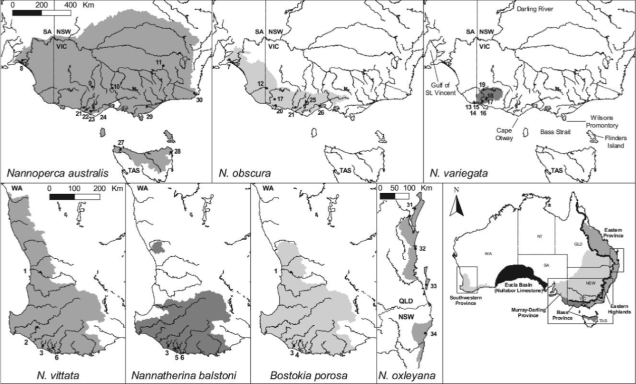
The distributions of different pygmy perch species (excluding Bostockia porosa, which is a related but different group), taken from Unmack et al. (2011). The black region in the bottom right part indicates the Nullarbor Plain, which separates eastern and western species.

The group consists of 2 genera (Nannoperca and Nannatherina) and 7 currently described species, although there could be as many as 10 actual species (see ‘cryptic species’: I’ll elaborate on this more in future posts…). They’re very picky about their habitat, preferring to stay within low flow waterbodies with high vegetation cover, such as floodplains and lowland creeks. Most species have a lifespan of a couple years, with different breeding times depending on the species.

Why study pygmy perches?

So, they’re pretty cute little fish. But unfortunately, that’s not usually enough justification to study a particular organism. So, why does the Molecular Ecology Lab choose to use pygmy perch as one (of several) focal groups? Well, there’s a number of different reasons.

The main factors that contribute to their research interest are their other characteristics: because they’re so small and habitat specialists, they often form small, isolated populations that are naturally separated by higher flow rivers and environmental barriers. They also appear to have naturally very low genetic diversity: ordinarily, we’d expect that they wouldn’t be great at adapting and surviving over a long time. Yet, they’ve been here for a long time: so how do they do it? That’s the origin of many of the research questions for pygmy perches.

Adaptive evolution despite low genetic variation

One of the fundamental aspects of the genetic basis of evolution is the connection between genetic diversity and ‘adaptability’: we expect that populations or species with more genetic diversity are much more likely to be able to evolve and adapt to new selective pressures than those without it. Pygmy perches clearly contradict this at least a little bit, and so much of the research in the lab is about understanding exactly what factors and mechanisms contribute to the ability of pygmy perches to apparently adapt and survive what is traditionally not consider a very tolerant place to live. Recent research suggests the different expression of genes may be an important mechanism of adaptation for pygmy perch.

Recommended readings: Brauer et al. (2016); Brauer et al. (2017).

The influence of the historic environment on evolution

From an evolutionary standpoint, pygmy perches are unique in more ways than just their genetic diversity. They’re relatively ancient, with the origin of the group estimated at around 40 million years ago. Since then, they’ve diversified into a number of different species and have spread all over the southern half of the Australian continent, demonstrating multiple movements across Australia in that time. This pattern is unusual for freshwater organisms, and this combined with their ancient nature makes them ideal candidates for studying the influence of historic environment, climate and geology on the evolution and speciation of freshwater animals in Australia. And that’s the focus of my PhD (although not exclusively; plenty of other projects have explored questions in this area).
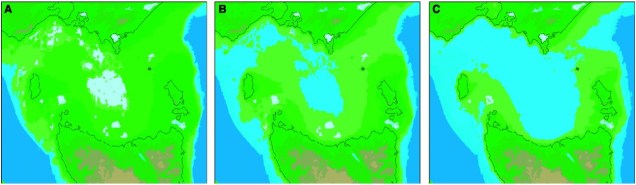
Bass Strait timelapse
The changing sea levels across the Bass Strait from A) 25 thousand years ago, B) 17.5 thousand years ago, and C) 14 thousand years ago (similar to today), from Lambeck and Chappel (2001). This is an example of one kind of environmental change that would likely have influenced the evolutionary patterns of pygmy perch, separating the populations from northern Tasmania and Victoria.

Recommended readings: Unmack et al. (2013); Unmack et al. (2011).

Conservation management and ecological role

Of course, it’s all well and good to study the natural, evolutionary history of an organism as if it hasn’t had any other influences. But we all know how dramatic the impact humans have on the environment are and unfortunately for many pygmy perch species this means that they are threatened or endangered and at risk of extinction. Their biggest threats are introduced predators (such as the redfin perch and European carp), alteration of waterways (predominantly for agriculture) and of course, climate change. For some populations, local extinction has already happened: some populations of the Yarra pygmy perch (N. obscura) are now completely gone from the wild. Many of these declines occurred during the Millennium Drought, where the aforementioned factors were exacerbated by extremely low water availability and consistently high temperatures. So naturally, a significant proportion of the work on pygmy perches is focused on their conservation, and trying to boost and recover declining populations.

This includes the formation of genetics-based breeding programs for two species, the southern pygmy perch and Yarra pygmy perch. A number of different organisations are involved in this ongoing process, including a couple of schools! These programs are informed by our other studies of pygmy perch evolution and adaptive potential and hopefully combined we can save these species from becoming totally extinct.
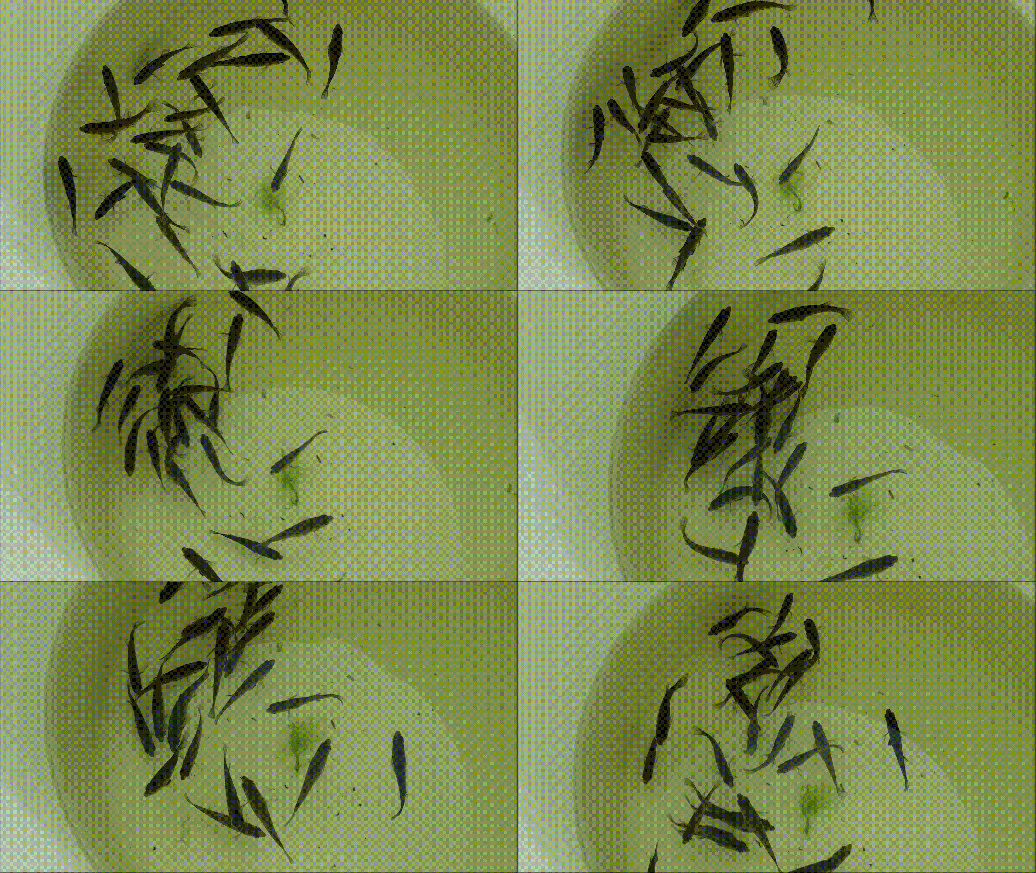
Yarra-breeders-vid.gif
Some of the Yarra pygmy perch from the extinct Murray-Darling Basin population, ready to make breeding groups!
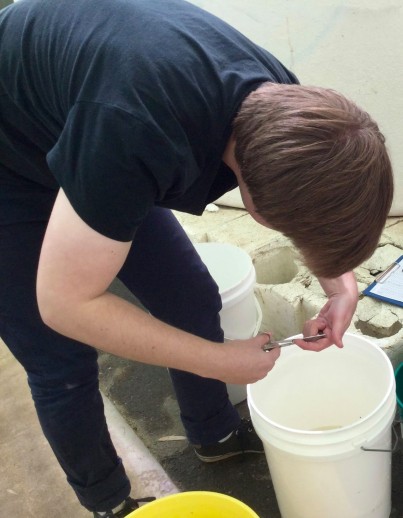
Fin clipping Yarras.jpg
Me, fin clipping the Yarra pygmy perch in the breeding groups for later genetic analyses. Yes, I know, I needed a haircut.

Recommended readings: Brauer et al. (2013); Attard et al. (2016); Hammer et al. (2013).

Hopefully, some of this convinces you that pygmy perch are actually rather interesting creatures (I certainly think so!). Pygmy perch research can offer a unique insight into evolutionary history, historical biogeography, and conservation management. Also, they’re kinda cute….so that’s gotta count for something, right? If you wanted to find out more about pygmy perch research, and get updates on our findings, be sure to check out the Molecular Ecology Lab Facebook page or our website!

“How do you conserve genes?”: clarifying conservation genetics

Sometimes when I talk about the concept of conservation genetics to friends and family outside of the field, there can be some confusion about what this actually means. Usually, it’s assumed that means the conservation of genetics: that is, instead of trying to conserve individual animals or plants, we try to conserve specific genes. While in some cases this is partially true (there might be genes of particular interest that we want to maintain in a wild population), often what we actually mean is using genetic information to inform conservation management and to give us the best chance of long-term rescue for endangered species.

DNA Zoo comic
Don’t worry, it’s an open range zoo: the genes have plenty of room to roam.

See, the DNA of individuals contains much more information than just the genes that make up an organism. By looking at the number, frequency or distribution of changes and differences in DNA across individuals, populations or species, we can see a variety of different patterns. Typically, genetics-based conservation analysis is based on a single unifying concept: that different forces create different patterns in the genetic make-up of species and populations, and that these can be statistically evaluated using genetic data. The exact type or scale of effect depends on how the data is collected and what analysis we use to evaluate that data, although we could do multiple types of analysis using the same dataset.

Oftentimes, we want to know about the current or historical state of a species or population to best understand how to move forward: by understanding where a species has come from, what it has been affected by, and how it has responded to different pressures, we can start to suggest and best manage these species into the future.

However, there are lots of possible avenues for exploration: here are just a few…

Evolutionary significant units (ESUs) and management units (MUs)

One commonly used application of genetic information for conservation is the designation of what we call ‘Evolutionary Significant Units’ (ESUs). Using genetics, we can determine the boundaries of particular populations which correspond to their own unique evolutionary groups. These are often the results of historical processes which have separated and driven the independent evolution of each ESU, usually with low or no gene flow across these units. Generally, managing and conserving each of these can lead to overall more robust management of the species as a whole by making sure certain groups that have unique and potentially critical adaptations are maintained in the wild. Although ESUs can sometimes be arguable (particularly when there is some, but not much, gene flow across units), it forms an important aspect of conservation designations.

In cases of shorter term separations across these populations, where there are noticeable differences in the genetics of the populations but not necessarily massively different evolutionary histories, conservationists will sometimes refer to ‘Management Units’ (MUs). These have much weaker evolutionary pressure behind them but might be indicative of very recent impacts, such as human-driven fragmentation of habitat or contemporary climate change. MUs often reflect very sudden and recent changes in populations and might have profound implications for the future of these groups: thus, they are an important way of assessing the current state of the species. The next couple of figures demonstrate this from one of my colleagues’ research papers.

YPP_map
The geographic distributions of Yarra pygmy perch populations, generously taken from Brauer et al. (2013). Each dot and number on the map represents a single population of pygmy perch used in the analysis. The colour of the population represents which MU it belongs to, whilst the shape of the marker represents the ESU. To make this easier to visualise, the solid lines indicate the boundaries of ESUs while the dashed lines represent MU boundaries. You’ll notice that MUs are subsets of ESUs, and that Population 6 actually fits into two different ESUs: see below.
YPP_Structure
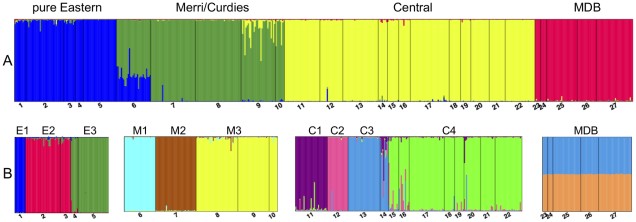
An example of the output of an analysis (STRUCTURE) that determines population boundaries for Yarra pygmy perch using genetic data, generously taken from Brauer et al. (2013). Structure is an ‘assignment test’; using the input genetic information, it tries to make groups of individuals which are more similar to one another than other groups. In the graphs, each small column represents a single individual, with the colour bars representing how well it fits that (colour) population. The smaller numbers at the bottom and the labels above the graphs represent geographic populations (see the figure above). A) Shows the 4 major ESUs of Yarra pygmy perch, with some clear mixing between the Eastern ESU and the Merri/Curdies ESU in population 6. The rest of the populations fit pretty well entirely into one ESU. B) The MUs of Yarra pygmy perch, which shows the genetic structure within ESUs that can’t be seen well in A). Notice that some ESUs are made of many MUs (E.g. Central) while others are only one MU (e.g. MDB).

The two can be thought of as part of the same hierarchy, with ESUs reflecting more historic, evolutionary groups and MUs reflecting more recent (but not necessarily evolutionary) groups. For conservation management, this has traditionally meant that individuals from one ESU were managed independent of one another (to preserve their ‘pure’ evolutionary history) whilst translocations of individuals across MUs were common and often recommended. This is based on the idea that mixing very genetically different populations could cause adaptive genes in each population to become ‘diluted’, negatively affecting the ability of the populations to evolve: this is referred to as ‘outbreeding depression’ (OD).

Coffee comic
Sometimes, adding something can make what you had even worse than before. The most depressing analogy of outbreeding depression; a ruined coffee.

However, more recent research has suggested that the concerns with OD from mixing across ESUs are less problematic than previously thought. Analysis of the effect of OD versus not supplementing populations with more genetic diversity has shown that OD is not the more dangerous option, and there is a current paradigm push to acknowledge the importance of mixing ESUs where needed.

Adaptive potential and future evolution

Understanding the genetic basis of evolution also forms an important research area for conservation management. This is particularly relevant for ‘adaptive potential’: that is, the ability for a particular species or population to be able to adapt to a variety of future stressors based on their current state. It is generally understood that having lots of different variants (alleles) of genes in the total population or species is a critical part of evolution: the more variants there are, the more choices there are for natural selection to act upon.

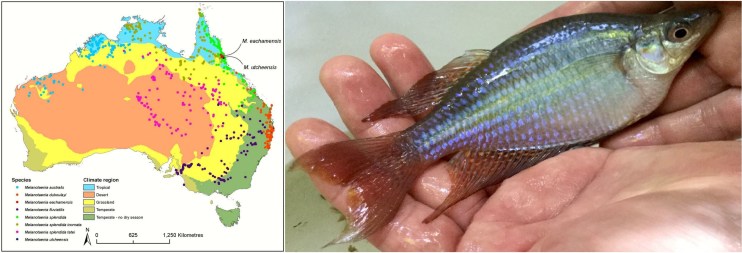
We can estimate this from the amount of genetic diversity within the population, as well as by trying to understand their previous experiences with adaptation and evolution. For example, it is predicted that species which occur in much more climatically variable habitats (such as in desert regions) are more likely to be able to handle and tolerate future climate change scenarios since they’ve demonstrated the ability to adapt to new, more extreme environments before. Examples of this include the Australian rainbowfishes, which are found in pretty well every climatic region across the continent (and therefore must be very good at adapting to new, varying habitats!).

Rainbowfish both.jpg
Left: The distribution of rainbowfish across Australia, with each colour representing a particular ecotypeRight: A photo of a (very big) tropical rainbowfish taken from a recent MELFU field trip. Source: MELFU Facebook page. He really got around after that one stint in that children’s story.

Genetics-based breeding programs and pedigrees

A much more direct use of genetic information for conservation is in designing breeding programs. We know that breeding related individuals can have very bad results for offspring (this is referred to as ‘inbreeding depression’): so obviously, we would avoid breeding siblings together. However, in complex breeding systems (such as polygamous animals), or in wild populations, it can be very difficult to evaluate relationships and overall relatedness.

That’s where genetics comes in: by looking at how similar or different the DNA of two individuals are, we can not only check what relationship they are (e.g. siblings, cousins, or very distantly related) but also get an exact value of their genetic relatedness. Since we know that having a diverse gene pool is critical for future adaptation and survival of a species, genetics-based breeding programs can maximise the amount of genetic diversity in following generations. We can even use a computer algorithm to make the very best of breeding groups, using a quirky program called SWINGER.

Cats DNA dating
If You Are the One, conservation genetics edition.

Taxonomy for conservation legislation

Another (slightly more complicated) application of genetics is the designation of species status. Large amounts of genetic information can often clarify complex issues of species descriptions (later issues of The G-CAT will discuss exactly how this works and why it’s not so straightforward…).

Why should we care what we call a species or not? Well, much of the protective legislation at the government level is designed at the species-level: legislative protections are often designated for a particular species, but doesn’t often distinguish particular populations. Thus, misidentified species can sometimes but lost if they were never detected as a unique species (and assumed to be just a population of another species). Alternatively, managing two species as one based on misidentification could mess with the evolutionary pathways of both by creating unfit hybrid species which do not naturally come into contact together (say, breeding individuals from one species with another because we thought they were the same species).

Cryptic cats comic
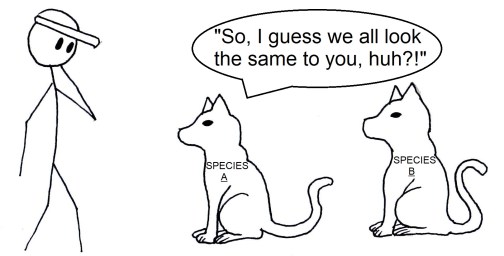
Awkward.

Additionally, if we assume that multiple different species are actually only one species, this can provide an overestimate of how well that species is doing. Although in total it might look like there are plenty of individuals of the species around, if this was actually made of 4 separate species then each one would be doing ¼ as well as we thought. This can feed back into endangered status classification and thus conservation management.


These are just some of the most common examples of applied genetics in conservation management. No doubt going into the future more innovative and creative methods of applying genetic information to maintaining threatened species and populations will become apparent. It’s an exciting time to be in the field and inspires hope that we may be able to save species before they disappear from the planet permanently.