UnConservation Genetics: tools for managing invasive species

Conservation genetics

Naturally, all species play their role in the balancing and functioning of ecosystems across the globe (even the ones we might not like all that much, personally). Persistence or extinction of ecologically important species is a critical component of the overall health and stability of an ecosystem, and thus our aim as conservation scientists is to attempt to use whatever tools we have at our disposal to conserve species. One of the most central themes in conservation ecology (and to The G-CAT, of course) is the notion that genetic information can be used to better our conservation management approaches. This usually involves understanding the genetic history and identity of our target threatened species from which we can best plan for their future. This can take the form of genetic-informed relatedness estimates for breeding programs; identifying important populations and those at risk of local extinction; or identifying evolutionarily-important new species which might hold unique adaptations that could allow them to persist in an ever-changing future.

Applications of conservation genetics.jpg
Just a few applications of genetic information in conservation management, such as in breeding programs and pedigrees (left), identifying new/cryptic species (centre) and identifying and maintaining populations and their structure (right).

The Invaders

Contrastingly, sometimes we might also use genetic information to do the exact opposite. While so many species on Earth are at risk (or have already passed over the precipice) of extinction, some have gone rogue with our intervention. These are, of course, invasive species; pests that have been introduced into new environments and, by their prolific nature, start to throw out the balance of the ecosystem. Australians will be familiar with no shortage of relevant invasive species; the most notable of which is the cane toad, Rhinella marina. However, there are a plethora of invasive species which range from notably prolific (such as the cane toad) to the seemingly mundane (such as the blackbird): so how can we possibly deal with the number and propensity of pests?

Table of invasive species in Australia
A table of some of the most prolific mammalian invasive species in Australia, including when they were first introduced and why, and their (relatively) recently estimated population sizes. Source: Wikipedia (and studies referenced therein). Some estimated numbers might not reflect current sizes as they were obtained from studies over the last 10 years.

Tools for invasive species management

There are a number of tools at our disposal for dealing with invasive species. These range from chemical controls (like pesticides), to biological controls and more recently to targeted genetic methods. Let’s take a quick foray into some of these different methods and their applications to pest control.
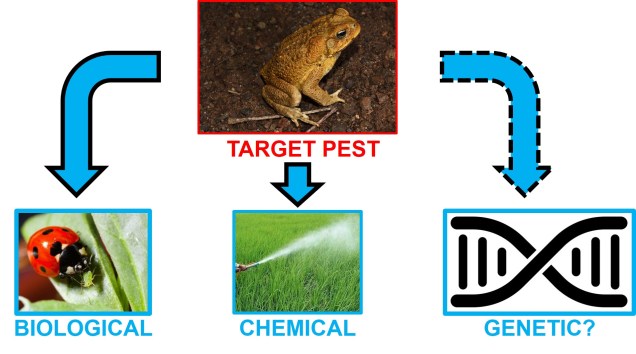
Types of control tools for invasive species
Some of the broad categories of invasive species control. For any given pest species, such as the cane toad (top), we might choose to use a particular set of methods to reduce their numbers. These can include biological controls (such as the ladybird, for aphid populations (left)); chemical controls such as pesticides; or even genetic engineering technologies.

Biological controls

One of the most traditional methods of pest control are biological controls. A biological control is, in simple terms, a species that can be introduced to an afflicted area to control the population of an invasive species. Usually, this is based on some form of natural co-evolution or hierarchy: species which naturally predate upon, infect or otherwise displace the pest in question are preferred. The basis of this choice is that nature, and evolution by natural selection, often creates a near-perfect machine adapted for handling the exact problem.

Biological controls can have very mixed results. In some cases, they can be relatively effective, such as the introduction of the moth Cactoblastis cactorum into Australia to control the invasive prickly pear. The moth lays eggs exclusively within the tissue of the prickly pear, and the resultant caterpillars ravish the plant. There has been no association of secondary diet items for caterpillars, suggesting the control method has been very selective and precise.

Moth biological control flow chart
The broad life cycle of the cactus moth and how it controls the invasive prickly pear in Australia. The ravenous caterpillar larvae of the moth is effective at decimating prickly pears, whilst the moth’s specificity to this host means there is limited impact on other plant species.

On the contrary, bad biological controls can lead to ecological disasters. As mentioned above, the introduction of the cane toad into Australia has been widely regarded as the origin of one of the worst invasive pests in the nation’s history. Initially, cane toads were brought over in the 1930s to predate on the (native) cane beetle, which was causing significant damage to sugar cane plantations in the tropical north. Not overly effective at actually dealing with the problem they were supposed to deal with, the cane toad rapidly spread across northern portion of the continent. Native species that attempt to predate on the cane toad often die to their defensive toxin, causing massive ecological damage to the system.

The potential secondary impact of biological controls, and the degree of unpredictability in how they will respond to a new environment (and how native species will also respond to their introduction) leads conservationists to develop new, more specific techniques. In similar ways, viral and bacterial-based controls have had limited success (although are still often proposed in conservation management, such as the planned carp herpesvirus release).

Genetic controls?

It is clear that more targeted and narrow techniques are required to effectively control pest species. At a more micro level, individual genes could be used to manage species: this is not the first way genetic modification has been proposed to deal with problem organisms. Genetic methods have been employed for years in crop farming through genetic engineering of genes to produce ‘natural’ pesticides or insecticides. In a similar vein, it has been proposed that genetic modification could be a useful tool for dealing with invasive pests and their native victims.

Gene drives

One promising targeted, genetic-based method that has shown great promise is the gene drive. Following some of the theory behind genetic engineering, gene drives are targeted suites of genes (or alleles) which, by their own selfish nature, propagate through a population at a much higher rate than other alternative genes. In conjunction with other DNA modification methods, which can create fatal or sterilising genetic variants, gene drives present the opportunity to allow the natural breeding of an invasive species to spread the detrimental modified gene.

Gene drive diagram
An example of how gene drives are being proposed to tackle malaria. In this figure, the pink mosquito at the top has been genetically engineered using CRISPR to possess two important genetic elements: a genetic variant which causes the mosquito to be unable to produce eggs or bite (the pink gene), and a linked selfish genetic element (the gene drive itself; the plus) which makes this detrimental allele spread more rapidly than by standard inheritance. Sources: Nature and The Australian Academy of Science.

Although a relatively new, and untested, technique, gene drive technology has already been proposed as a method to address some of the prolific invasive mammals of New Zealand. Naturally, there are a number of limitations and reservations for the method; similar to biological control, there is concern for secondary impact on other species that interact with the invasive host. Hybridisation between invasive and native species would cause the gene drive to be spread to native species, counteracting the conservation efforts to save natives. For example, a gene drive could not reasonably be proposed to deal with feral wild dogs in Australia without massively impacting the ‘native’ dingo.

Genes for non-genetic methods

Genetic information, more broadly, can also be useful for pest species management without necessarily directly feeding into genetic engineering methods. The various population genetic methods that we’ve explored over a number of different posts can also be applied in informing management. For example, understanding how populations are structured, and the sizes and demographic histories of these populations, may help us to predict how they will respond in the future and best focus our efforts where they are most effective. By including analysis of their adaptive history and responses, we may start to unravel exactly what makes a species a good invader and how to best predict future susceptibility of an environment to invasion.

Table of genetic information applications
A comprehensive table of the different ways genetic information could be applied in broader invasive species management programs, from Rollins et al. (2006). This paper specifically relates to pest management within Western Australia but the concepts listed here apply broadly. Many of these concepts we have discussed previously in a conservation management context as well.

The better we understand invasive species and populations from a genetic perspective, the more informed our management efforts can be and the more likely we are to be able to adequately address the problem.

Managing invasive pest species

The impact of human settlement into new environments is exponentially beyond our direct influences. With our arrival, particularly in the last few hundred years, human migration has been an effective conduit for the spread of ecologically-disastrous species which undermine the health and stability of ecosystems around the globe. As such, it is our responsibility to Earth to attempt to address our problems: new genetic techniques is but one growing avenue by which we might be able to remove these invasive pests.

Pressing Ctrl-Z on Life with De-extinction

Note: For some clear, interesting presentations on the topic of de-extinction, and where some of the information for this post comes from, check out this list of TED talks.

The current conservation crisis

The stark reality of conservation in the modern era epitomises the crisis discipline that so often is used to describe it: species are disappearing at an unprecedented rate, and despite our best efforts it appears that they will continue to do so. The magnitude and complexity of our impacts on the environment effectively decimates entire ecosystems (and indeed, the entire biosphere). It is thus our responsibility as ‘custodians of the planet’ (although if I had a choice, I would have sacked us as CEOs of this whole business) to attempt to prevent further extinction of our planet’s biodiversity.

Human CEO example
“….shit.”

If you’re even remotely familiar with this blog, then you would have been exposed to a number of different techniques, practices and outcomes of conservation research and its disparate sub-disciplines (e.g. population genetics, community ecology, etc.). Given the limited resources available to conserve an overwhelming number of endangered species, we attempt to prioritise our efforts towards those most in need, although there is a strong taxonomic bias underpinning them.

At least from a genetic perspective, this sometimes involves trying to understand the nature and potential of adaptation from genetic variation (as a predictor of future adaptability). Or using genetic information to inform captive breeding programs, to allow us to boost population numbers with minimal risk of inbreeding depression. Or perhaps allowing us to describe new, unidentified species which require their own set of targeted management recommendations and political legislation.

Genetic rescue

Yet another example of the use of genetics in conservation management, and one that we have previously discussed on The G-CAT, is the concept of ‘genetic rescue’. This involves actively adding new genetic material from other populations into our captive breeding programs to supplement the amount of genetic variation available for future (or even current) adaptation. While there traditionally has been some debate about the risk of outbreeding depression, genetic rescue has been shown to be an effective method for prolonging the survival of at-risk populations.

super-gene-genetic-rescue-e1549973268851.jpg
How my overactive imagination pictures ‘genetic rescue’.

There’s one catch (well, a few really) with genetic rescue: namely, that one must have other populations to ‘outbreed’ with in order add genetic variation to the captive population. But what happens if we’re too late? What if there are no other populations to supplement with, or those other populations are also too genetically depauperate to use for genetic rescue?

Believe it or not, sometimes it’s not too late to save species, even after they have gone extinct. Which brings us from this (lengthy) introduction to this week’s topic: de-extinction. Yes, we’re literally (okay, maybe not) going to raise the dead.

Necroconservaticon
Your textbook guide to de-extinction. Now banned in 47 countries.

Backbreeding: resurrection by hybridisation

You might wonder how (or even if!) this is possible. And to be frank, it’s extraordinarily difficult. However, it has to a degree been done before, in very specific circumstances. One scenario is based on breeding out a species back into existence: sometimes we refer to this as ‘backbreeding’.

This practice really only applies in a few select scenarios. One requirement for backbreeding to be possible is that hybridisation across species has to have occurred in the past, and generally to a substantial scale. This is important as it allows the genetic variation which defines one of those species to live on within the genome of its sister species even when the original ‘host’ species goes extinct. That might make absolutely zero sense as it stands, so let’s dive into this with a case study.

I’m sure you’ll recognise (at the very least, in name) these handsome fellows below: the Galápagos tortoise. They were a pinnacle in Charles Darwin’s research into the process of evolution by natural selection, and can live for so long that until recently there had been living individuals which would have been able to remember him (assuming, you know, memory loss is not a thing in tortoises. I can’t even remember what I had for dinner two days ago, to be fair). As remarkable as they are, Galápagos tortoises actually comprise 15 different species, which can be primarily determined by the shape of their shells and the islands they inhabit.

Galapagos island and tortoises
A map of the Galápagos archipelago and tortoise species, with extinct species indicated by symbology. Lonesome George was the last known living member of the Pinta Island tortoise, C. abingdonii for reference. Source: Wikipedia.

One of these species, Chelonoidis elephantopus, also known as the Floreana tortoise after their home island, went extinct over 150 years ago, likely due to hunting and tradeHowever, before they all died, some individuals were transported to another island (ironically, likely by mariners) and did the dirty with another species of tortoise: C. becki. Because of this, some of the genetic material of the extinct Floreana tortoise introgressed into the genome of the still-living C. becki. In an effort to restore an iconic species, scientists from a number of institutions attempted to do what sounds like science-fiction: breed the extinct tortoise back to life.

By carefully managing and selectively breeding captive individuals , progressive future generations of the captive population can gradually include more and more of the original extinct C. elephantopus genetic sequence within their genomes. While a 100% resurrection might not be fully possible, by the end of the process individuals with progressively higher proportion of the original Floreana tortoise genome will be born. Although maybe not a perfect replica, this ‘revived’ species is much more likely to serve a similar ecological role to the now-extinct species, and thus contribute to ecosystem stability. To this day, this is one of the closest attempts at reviving a long-dead species.

Is full de-extinction possible?

When you saw the title for this post, you were probably expecting some Jurassic Park level ‘dinosaurs walking on Earth again’ information. I know I did when I first heard the term de-extinction. Unfortunately, contemporary de-extinction practices are not that far advanced just yet, although there have been some solid attempts. Experiments conducted using the genomic DNA from the nucleus of a dead animal, and cloning it within the egg of another living member of that species has effectively cloned an animal back from the dead. This method, however, is currently limited to animals that have died recently, as the DNA degrades beyond use over time.

The same methods have been attempted for some extinct animals, which went extinct relatively recently. Experiments involving the Pyrenean ibex (bucardo) were successful in generating an embryo, but not sustaining a living organism. The bucardo died 10 minutes after birth due to a critical lung condition, as an example.

The challenges and ethics of de-extinction

One might expect that as genomic technologies improve, particularly methods facilitated by the genome-editing allowed from CRISPR/Cas-9 development, that we might one day be able to truly resurrect an extinct species. But this leads to very strongly debated topics of ethics and morality of de-extinction. If we can bring a species back from the dead, should we? What are the unexpected impacts of its revival? How will we prevent history from repeating itself, and the species simply going back extinct? In a rapidly changing world, how can we account for the differences in environment between when the species was alive and now?

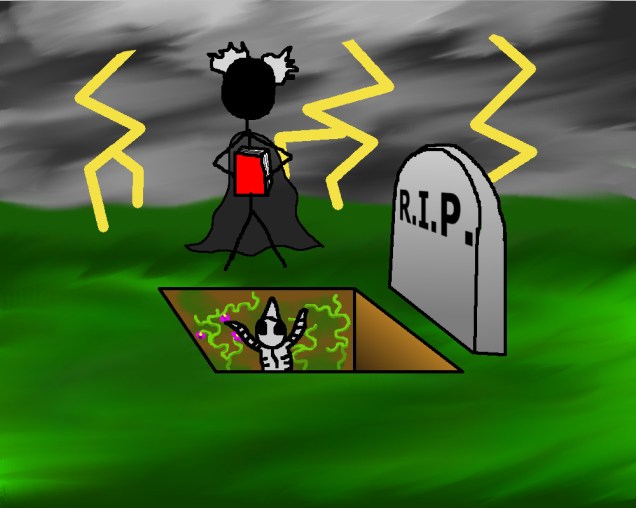
Deextinction via necromancy figure
The Chaotic Neutral (?) approach to de-extinction.

There is no clear, simple answer to many of these questions. We are only scratching the surface of the possibility of de-extinction, and I expect that this debate will only accelerate with the research. One thing remains eternally true, though: it is still the distinct responsibility of humanity to prevent more extinctions in the future. Handling the growing climate change problem and the collapse of ecosystems remains a top priority for conservation science, and without a solution there will be no stable planet on which to de-extinct species.

de-extinction meme
You bet we’re gonna make a meme months after it’s gone out of popularity.

The folly of absolute dichotomies

Divide and conquer (nothing)

Divisiveness is becoming quickly apparent as a plague on the modern era. The segregation and categorisation of people – whether politically, spiritually or morally justified – permeates throughout the human condition and in how we process the enormity of the Homo sapien population. The idea that the antithetic extremes form two discrete categories (for example, the waning centrist between ‘left’ vs. ‘right’ political perspectives) is widely employed in many aspects of the world.

But how pervasive is this pattern? How well can we summarise, divide and categorise people? For some things, this would appear innately very easy to do – one of the most commonly evoked divisions in people is that between men and women. But the increasingly charged debate around concepts of both gender and sex (and sexuality as a derivative, somewhat interrelated concept) highlights the inconsistency of this divide.

The ‘sex’ and ‘gender’ arguments

The most commonly used argument against ‘alternative’ concepts of either gender of sex – the binary states of a ‘man’ with a ‘male’ body and a ‘female’ with a ‘female’ body – is often based on some perception of “biologically reality.” As a (trainee) biologist, let me make this apparently clear that such confidence and clarity of “reality” in many, if not all, biological subdisciplines is absurd (e.g. “nature vs. nurture”). Biologists commonly acknowledge (and rely upon) the realisation that life in all of its constructs is unfathomably diverse, unique, and often difficult to categorise. Any impression of being able to do so is a part of the human limitation to process concepts without boundaries.

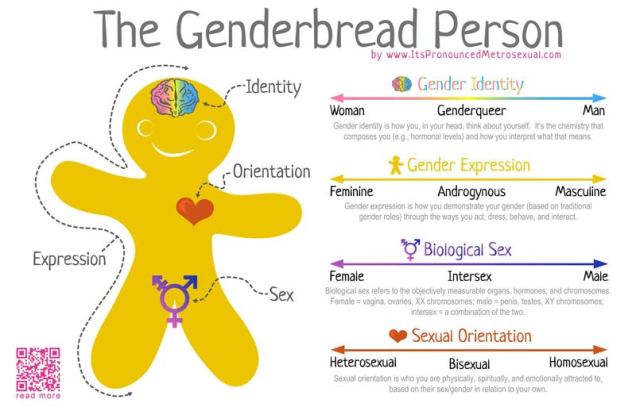
Genderbread-Person figure
A great example of the complex nature of human sex and gender. You’ll notice that each category is itself a spectrum: even Biological Sex is not a clearly binary system. In fact, even this representation likely simplifies the complexity of human identity and sexuality given that each category is only a single linear scale (e.g. pansexuality and asexuality aren’t on the Sexual Orientation gradient), but nevertheless is a good summary. Source: It’s Pronounced METROsexual.

Gender as a binary

In terms of gender identity, I think this is becoming (slowly) more accepted over time. That most people have a gender identity somewhere along a multidimensional spectrum is not, for many people, a huge logical leap. Trans people are not mentally ill, not all ‘men’ identify as ‘men’ and certainly not all ‘men’ identify as a ‘man’ under the same characteristics or expression. Human psychology is beautifully complex and to reduce people down to the most simplistic categories is, in my humble opinion, a travesty. The single-variable gender binary cannot encapsulate the full depth of any single person’s identity or personality, and this biologically makes sense.

Sex as a binary

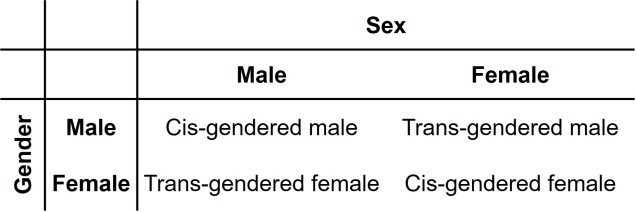
As an extension of the gender debate, sex itself has often been relied upon as the last vestige of some kind of sexual binary. Even for those more supported of trans people, sex is often described as some concrete, biologically, genetically-encoded trait which conveniently falls into its own binary system. Thus, instead of a single binary, people are reduced down to a two-character matrix of sex and gender.

Gender and sex table.jpg
A representative table of the “2 Character Sex and Gender” composition. Although slightly better at allowing for complexity in people’s identities, having 2 binaries instead of 1 doesn’t encapsulate the full breadth of diversity in either sex or gender.

However, the genetics of the definition and expression of sex is in itself a complex network of the expression of different genes and the presence of different chromosomes. Although high-school level biology teaches us that men are XY and women are XX genetically, individual genes within those chromosomes can alter the formation of different sexual organs and the development of a person. Furthermore, additional X or Y chromosomes can further alter the way sexual development occurs in people. Many people who fall in between the two ends of the gender spectrum of Male and Female identify as ‘intersex’.

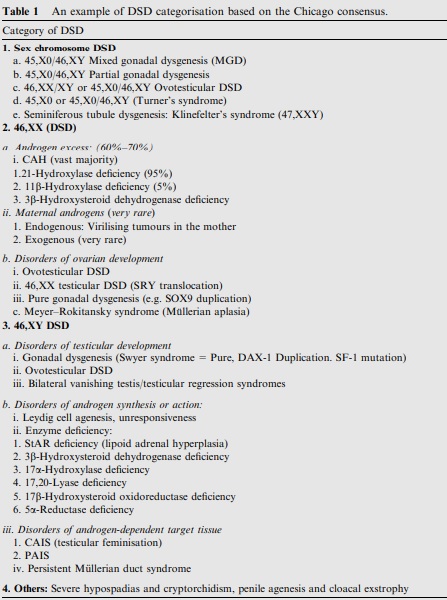
DSD types table.jpg
A list of some of the known types of ‘Disorders of Sex Development’ (DSDs) which can lead to non-binary sex development in many different ways. Within these categories, there may be multiple genetic mechanisms (e.g. specific mutations) underlying the symptoms. It’s also important to note that while DSD medically describes the conditions of many people, it can be offensive/inappropriate to many intersex people (‘disorder’ can be a heavy word). Source: El-Sherbiny (2013).

You might be under the impression that these are rare ‘genetic disorders’, and don’t count as “real people” (decidedly not my words). But the reality is that intersex people are relatively common throughout the world, and occur roughly as frequently as true redheads or green eyes. Thus, the idea that excluding intersex people from the rest of societal definitions has very little merit, especially from a scientific point of view. Instead, allowing our definitions of both sex and gender to be broad and flexible allows us to incorporate the biological reality of the immense diversity of the world, even just within our own species.

Absolute species concepts

Speaking of species, and relating this paradigm of dichotomy to potentially less politically charged concepts, species themselves are a natural example on the inaccuracy of absolutism. This idea is not a new one, either within The G-CAT or within the broad literature, and species identity has long been regarded as a hive of grey areas. The sheer number of ways a group of organisms can be divided into species (or not, as the case may be) lends to the idea that simplified definitions of what something is or is not will rarely be as accurate as we hope. Even the most commonly employed of characteristics – such as those of the Biological Species Conceptcannot be applied to a number of biological systems such as asexually-reproducing species or complex cases of isolation.

Speciation continuum figure
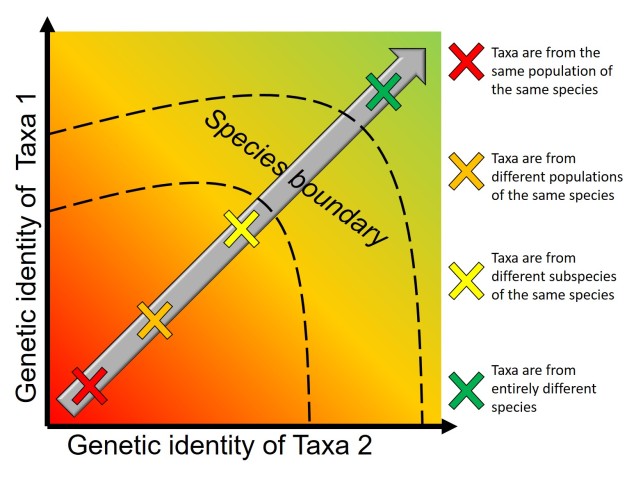
A figure describing the ‘speciation continuum’ from a previous post on The G-CAT. Now imagine that each Species Concept has it’s own vague species boundary (dotted line): draw 30 of them over the top of one another, and try to pick the exact cut-off between the red and green areas. Even using the imagination, this would be difficult.

The diversity of Life

Anyone who argues a biological basis for these concepts is taking the good name of biological science hostage. Diversity underpins the most core aspects of biology (e.g. evolution, communities and ecosystems, medicine) and is a real attribute of living in a complicated world. Downscaling and simplifying the world to the ‘black’ and the ‘white’ discredits the wonder of biology, and acknowledging the ‘outliers’ (especially those that are not actually so far outside the boxes we have drawn) of any trends we may observe in nature is important to understand the complexity of life on Earth. Even if individual components of this post seem debatable to you: always remember that life is infinitely more complex and colourful than we can even imagine, and all of that is underpinned by diversity in one form or another.

The space for species: how spatial aspects influence speciation

Spatial and temporal factors of speciation

The processes driving genetic differentiation, and the progressive development of populations along the speciation continuum, are complex in nature and influenced by a number of factors. Generally, on The G-CAT we have considered the temporal aspects of these factors: how time much time is needed for genetic differentiation, how this might not be consistent across different populations or taxa, and how a history of environmental changes affect the evolution of populations and species. We’ve also touched on the spatial aspects of speciation and genetic differentiation before, but in significantly less detail.

To expand on this, we’re going to look at a few different models of how the spatial distribution of populations influences their divergence, and particularly how these factor into different processes of speciation.

What comes first, ecological or genetic divergence?

One key paradigm in understanding speciation is somewhat an analogy to the “chicken and the egg scenario”, albeit with ecological vs. genetic divergence. This concept is based on the idea that two aspects are key for determining the formation of new species: genetic differentiation of the populations in question, and ecological (or adaptive) changes that provide new ecological niches for species to inhabit. Without both, we might have new morphotypes or ecotypes of a singular species (in the case of ecological divergence without strong genetic divergence) or cryptic species (genetically distinct but ecologically identical species).

The order of these two processes have been in debate for some time, and different aspects of species and the environment can influence how (or if) these processes occur.

Different spatial models of speciation

Generally, when we consider the spatial models for speciation we divide these into distinct categories based on the physical distance of populations from one another. Although there is naturally a lot of grey area (as there is with almost everything in biological science), these broad concepts help us to define and determine how speciation is occurring in the wild.

Allopatric speciation

The simplest model is one we have described before called “allopatry”. In allopatry, populations are distributed distantly from one another, so that there are separated and isolated. A common way to imagine this is islands of populations separated by ocean of unsuitable habitat.

Allopatric speciation is considered one of the simplest and oldest models of speciation as the process is relatively straightforward. Geographic isolation of populations separates them from one another, meaning that gene flow is completely stopped and each population can evolve independently. Small changes in the genes of each population over time (e.g. due to different natural selection pressures) cause these populations to gradually diverge: eventually, this divergence will reach a point where the two populations would not be compatible (i.e. are reproductively isolated) and thus considered separate species.

Allopatry_example
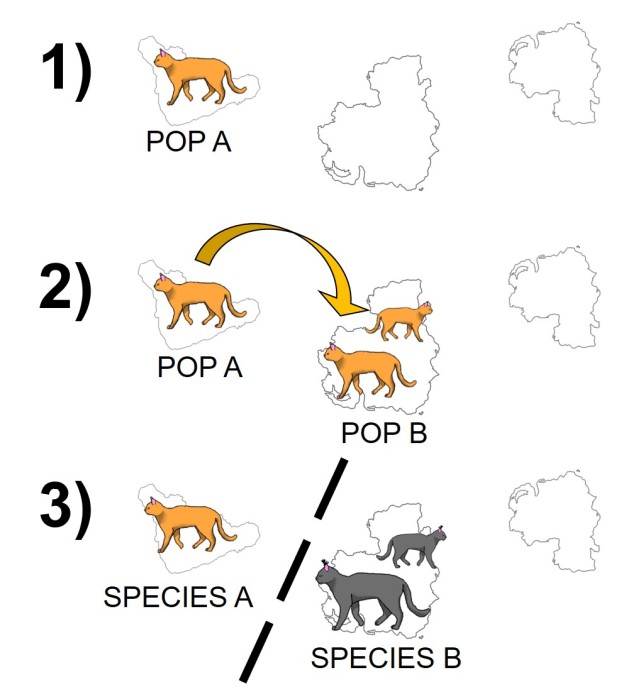
The standard model of allopatric speciation, following an island model. 1) We start with a single population occupying a single island.  2) A rare dispersal event pushes some individuals onto a new island, forming a second population. Note that this doesn’t happen often enough to allow for consistent gene flow (i.e. the island was only colonised once). 3) Over time, these populations may accumulate independent genetic and ecological changes due to both natural selection and drift, and when they become so different that they are reproductively isolated they can be considered separate species.

Although relatively straightforward, one complex issue of allopatric speciation is providing evidence that hybridisation couldn’t happen if they reconnected, or if populations could be considered separate species if they could hybridise, but only under forced conditions (i.e. it is highly unlikely that the two ‘species’ would interact outside of experimental conditions).

Parapatric and peripatric speciation

A step closer in bringing populations geographically together in speciation is “parapatry” and “peripatry”. Parapatric populations are often geographically close together but not overlapping: generally, the edges of their distributions are touching but do not overlap one another. A good analogy would be to think of countries that share a common border. Parapatry can occur when a species is distributed across a broad area, but some form of narrow barrier cleaves the distribution in two: this can be the case across particular environmental gradients where two extremes are preferred over the middle.

The main difference between paraptry and allopatry is the allowance of a ‘hybrid zone’. This is the region between the two populations which may not be a complete isolating barrier (unlike the space between allopatric populations). The strength of the barrier (and thus the amount of hybridisation and gene flow across the two populations) is often determined by the strength of the selective pressure (e.g. how unfit hybrids are). Paraptry is expected to reduce the rate and likelihood of speciation occurring as some (even if reduced) gene flow across populations is reduces the amount of genetic differentiation between those populations: however, speciation can still occur.

Parapatric speciation across a thermocline.jpg
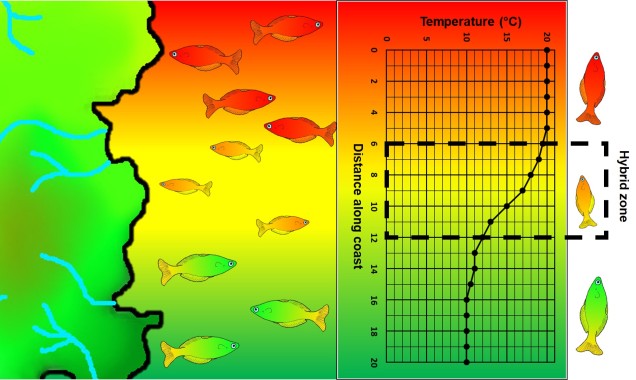
An example of parapatric species across an environment gradient (in this case, a temperature gradient along the ocean coastline). Left: We have two main species (red and green fish) which are adapted to either hotter or colder temperatures (red and green in the gradient), respectively. A small zone of overlap exists where hybrid fish (yellow) occur due to intermediate temperature. Right: How the temperature varies across the system, forming a steep gradient between hot and cold waters.

Related to this are peripatric populations. This differs from parapatry only slightly in that one population is an original ‘source’ population and the other is a ‘peripheral’ population. This can happen from a new population becoming founded from the source by a rare dispersal event, generating a new (but isolated) population which may diverge independently of the source. Alternatively, peripatric populations can be formed when the broad, original distribution of the species is reduced during a population contraction, and a remnant piece of the distribution becomes fragmented and ‘left behind’ in the process, isolated from the main body. Speciation can occur following similar processes of allopatric speciation if gene flow is entirely interrupted or paraptric if it is significantly reduced but still present.

Peripatric distributions.jpg
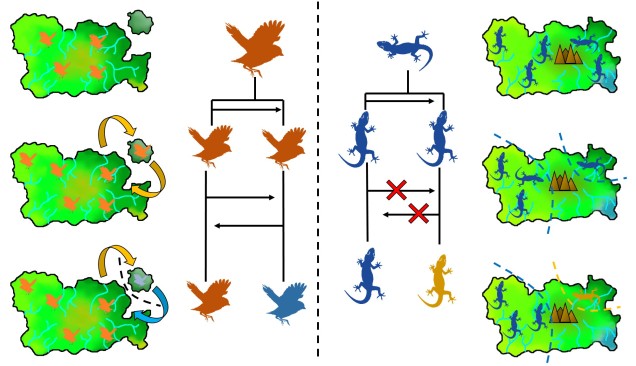
The two main ways peripatric species can form. Left: The dispersal method. In this example, there is a central ‘source’ population (orange birds on the main island), which holds most of the distribution. However, occasionally (more frequently than in the allopatric example above) birds can disperse over to the smaller island, forming a (mostly) independent secondary population. If the gene flow between this population and the central population doesn’t overwhelm the divergence between the two populations (due to selection and drift), then a new species (blue birds) can form despite the gene flow. Right: The range contraction method. In this example, we start with a single widespread population (blue lizards) which has a rapid reduction in its range. However, during this contraction one population is separated from the main body (i.e. as a refugia), which may also be a precursor of peripatric speciation.

Sympatric (ecological) speciation

On the other end of the distribution spectrum, the two diverging populations undergoing speciation may actually have completely overlapping distributions. In this case, we refer to these populations as “sympatric”, and the possibility of sympatric speciation has been a highly debated topic in evolutionary biology for some time. One central argument rears its head against the possibility of sympatric speciation, in that if populations are co-occurring but not yet independent species, then gene flow should (theoretically) occur across the populations and prevent divergence.

It is in sympatric speciation that we see the opposite order of ecological and genetic divergence happen. Because of this, the process is often referred to as “ecological speciation”, where individual populations adapt to different niches within the same area, isolating themselves from one another by limiting their occurrence and tolerances. As the two populations are restricted from one another by some kind of ecological constraint, they genetically diverge over time and speciation can occur.

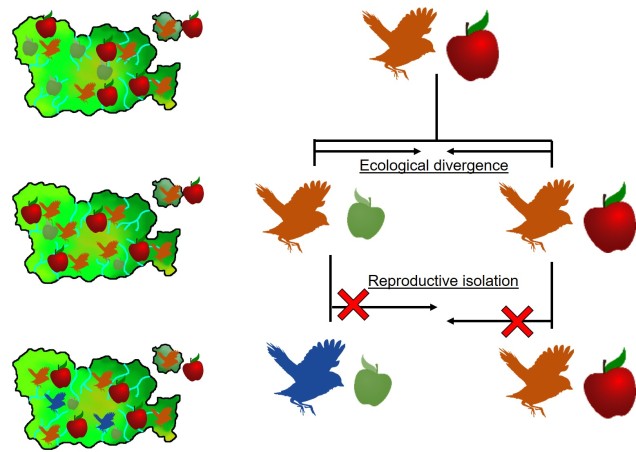
This can be tricky to visualise, so let’s invent an example. Say we have a tropical island, which is occupied by one bird species. This bird prefers to eat the large native fruit of the island, although there is another fruit tree which produces smaller fruits. However, there’s only so much space and eventually there are too many birds for the number of large fruit trees available. So, some birds are pushed to eat the smaller fruit, and adapt to a different diet, changing physiology over time to better acquire their new food and obtain nutrients. This shift in ecological niche causes the two populations to become genetically separated as small-fruit-eating-birds interact more with other small-fruit-eating-birds than large-fruit-eating-birds. Over time, these divergences in genetics and ecology causes the two populations to form reproductively isolated species despite occupying the same island.

Ecological sympatric speciation
A diagram of the ecological speciation example given above. Note that ecological divergence occurs first, with some birds of the original species shifting to the new food source (‘ecological niche’) which then leads to speciation. An important requirement for this is that gene flow is somehow (even if not totally) impeded by the ecological divergence: this could be due to birds preferring to mate exclusively with other birds that share the same food type; different breeding seasons associated with food resources; or other isolating mechanisms.

Although this might sound like a simplified example (and it is, no doubt) of sympatric speciation, it’s a basic summary of how we ended up with so many species of Darwin’s finches (and why they are a great model for the process of evolution by natural selection).

The complexity of speciation

As you can see, the processes and context driving speciation are complex to unravel and many factors play a role in the transition from population to species. Understanding the factors that drive the formation of new species is critical to understanding not just how evolution works, but also in how new diversity is generated and maintained across the globe (and how that might change in the future).


Short essay: Real life or (‘just’) fantasy?

The fantastical

Like many people, from a young age I was obsessed and interested in works of fantasy and science fiction. To feel transported to magical worlds of various imaginative creatures and diverse places. The luxury of being able to separate from the mundanity of reality is one many children (or nostalgic adults) will be able to relate to upon reflection. Worlds that appear far more creative and engaging than our own are intrinsically enticing to the human psyche and the escapism it allows is no doubt an integral part of growing up for many people (especially those who have also dealt or avoided dealing with mental health issues).

The biological

The intricate connection to the (super)natural world drove me to fall in love with the natural world. Although there might seem to be an intrinsic contrast between the two – the absence or presence of reality – the truth is that the world is a wondrous place if you observe it through an appropriate lens. Dragons are real, forms of life are astronomically varied and imaginative, and there we are surrounded by the unknown and potentially mythical. To see the awe and mystification on a child’s face when they see a strange or unique animal for the very first time bears remarkable parallels to the expression when we stare into the fantasy of Avatar or The Lord of the Rings.

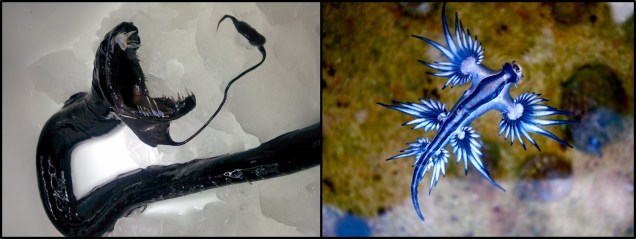
Combined dragon images
Two (very different) types of real life dragons. On the left, a terrifying dragon fish brought up from the abyssal depths by the CSIRO RV Investigator expedition. On the right, the minuscule but beautiful blue dragon (Glaucus atlanticus), which is actually a slug.

It might seem common for ‘nerds’ (at least under the traditional definition of being obsessed with particular aspects of pop culture) to later become scientists of some form or another. And I think this is a true reflection: particularly, I think the innate personality traits that cause one to look at the world of fantasy with wonder and amazement also commonly elicits a similar response in terms of the natural world. It is hard to see an example where the CGI’d majesty of contemporary fantasy and sci-fi could outcompete the intrigue generated by real, wondrous plants and animals.

Seeing the divine in the mundane

Although we often require a more tangible, objective justification for research, the connection of people to the diversity of life (whether said diversity is fictitious or not) should be a significant driving factor in the perceived importance of conservation management. However, we are often degraded to somewhat trivial discussions: why should we care about (x) species? What do they do for us? Why are they important?

Combined baobab images
Sometimes the ‘mundane’ (real) can inspire the ‘fantasy’… On the left, a real baobab tree (genus Adansonia: this one is Adansonia grandidieri) from Madagascar. On the right, the destructive baobab trees threaten to tear apart the prince’s planet in ‘The Little Prince’ by Antoine de Saint-Exupéry.

If we approach the real world and the organisms that inhabit it with truly the same wonder as we approach the fantastical, would we be more successful in preserving biodiversity? Could we reverse our horrific trend of letting species go extinct? Every species on Earth represents something unique: a new perspective, an evolutionary innovation, a lens through which to see the world and its history. Even the most ‘mundane’ of species represent something critical to functionality of ecosystems, and their lack of emphasis undermines their importance.

Dementor wasp.png
…and sometimes, the fantasy inspires the reality. This is the dementor wasp (Ampulex dementor), named after the frightening creatures from the ‘Harry Potter‘ series. The name was chosen by the public based on the behaviour of the wasp to inject a toxin into its cockroach prey, which effectively turns them into mindless zombies and makes them unable to resist being pulled helplessly into the wasp’s nest. Absolutely terrifying.

The biota of Earth are no different to the magical fabled beasts of science fiction and fantasy, and we’re watching it all burn away right in front of our eyes.