Like many “Nerds by Profession” (scientists), much of my love for evolutionary biology as a young kid was fostered by an amazing diversity of creatures, both real and fictional. A formative influence in the latter category for me was through gaming – while I hold love for many great gaming franchises, the Nintendo series Pikminholds a special place in my heart. The series of puzzle-cross-strategy games primarily following the misadventures of diminutive space explorer Captain Olimar, who crash lands on what is heavily implied (and later confirmed) to be a post-human Earth (or PNF-404, as it’s known). There, he is greeted by a strange plant-like species called Pikmin, who assist him in repairing his ship or collecting treasure (depending on the game). The Pikmin games require a certain degree of strategy, planning and time-efficiency in order to complete the necessary tasks within the limited timeframe of the game (or individual day).
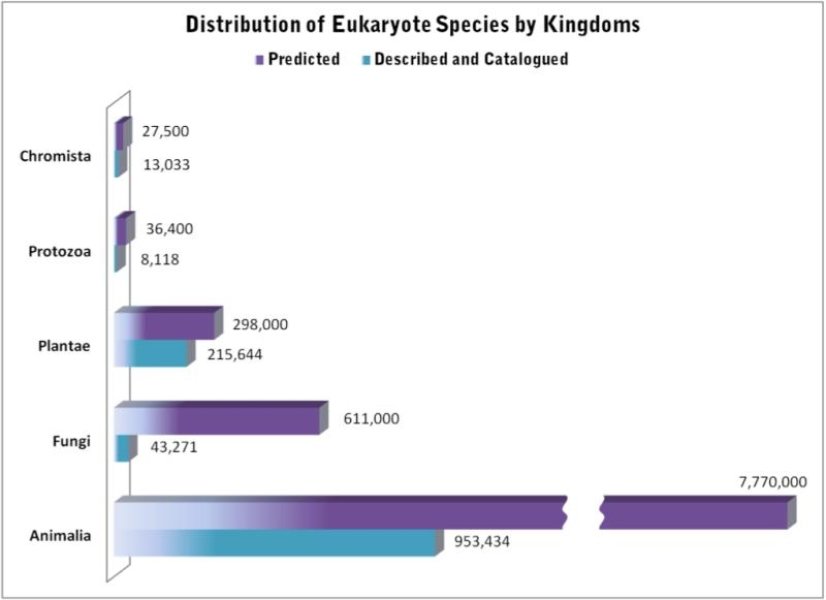
There are quite literally millions of species on Earth, ranging from the smallest of microbes to the largest of mammals. In fact, there are so many that we don’t actually have a good count on the sheer number of species and can only estimate it based on the species we actually know about. Unsurprisingly, then, the number of species vastly outweighs the number of people that research them, especially considering the sheer volumes of different aspects of species, evolution, conservation and their changes we could possibly study.
Some estimations on the number of eukaryotic species (i.e. not including things like bacteria), with the number of known species in blue and the predicted number of total species on Earth in purple. Source: Census of Marine Life.
This is partly where the concept of a ‘model’ comes into it: it’s much easier to pick a particular species to study as a target, and use the information from it to apply to other scenarios. Most people would be familiar with the concept based on medical research: the ‘lab rat’ (or mouse). The common house mouse (Mus musculus) and the brown rat (Rattus norvegicus) are some of the most widely used models for understanding the impact of particular biochemical compounds on physiology and are often used as the testing phase of medical developments before human trials.
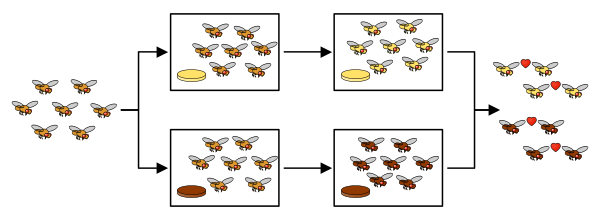
A simplified summary of the speciation experiment in Drosophila, starting with a single species and resulting in two reproductively isolated species based on mating and food preference. Source: Ilmari Karonen, adapted from here.
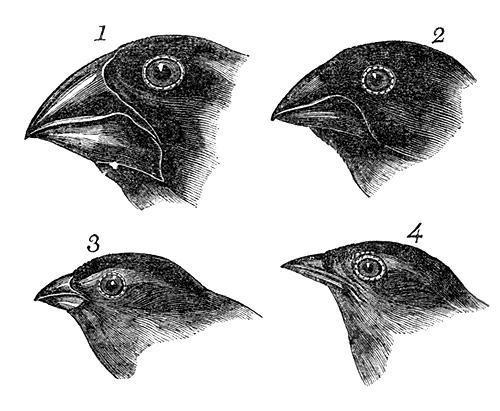
Some of Darwin’s early drawings of the morphological differences in Galapagos finch beaks, which lead to the formulation of the theory of evolution by natural selection.
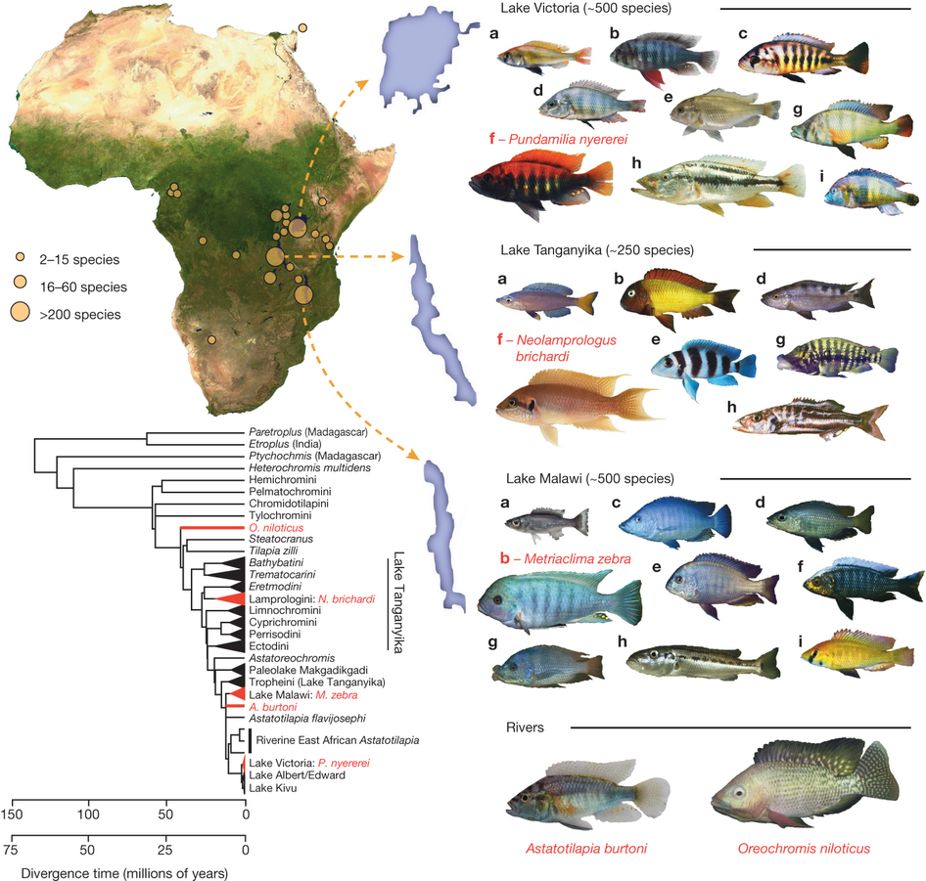
The sheer diversity of species and form makes African cichlids an ideal model for testing hypotheses and theories about the process of evolution and adaptive radiation. Figure sourced from Brawand et al. (2014) in Nature.

 The G-cat