
In more fishy news, this week the latest (and last!) chapter of my PhD, describing how millions of years of climatic stability have allowed isolated and divergent lineages of pygmy perches to persist, was published (Open Access) in Heredity. It covers population divergence, phylogenetic relationships (including estimation of divergence times), species delimitation and projections of species distributions from the past (up to three million years ago) into the future (up to 2100). Some highlights include:
- Populations of pygmy perch are highly genetically differentiated, and have persisted in isolation for millions of years;
- This includes the identification of at least two cryptic species within the western pygmy perch (Nannoperca vittata) lineage, which were not closely related (or even sister species);
- Stable climates in the past have allowed these lineages to persist, reflected by stable species distributions over time; and
- Future projections under climate change predict substantial contractions of range in both cryptic species, potentially including the complete loss of climatically-suitable habitat for one of them by 2070 (under a “business-as-usual” scenario).
This results are particularly pertinent given the accelerated rate of climate change here in Western Australia: massive declines in rainfall, rapidly increasing annual temperatures and recent forest die-offs all point to a need for ambitious and direct conservation action. These impacts are likely to be especially damaging due to the high level of endemic biodiversity in the region.
If you don’t have the time (or the patience: I don’t blame you!) to read the full paper, I recommend checking out the summary blog post I wrote for the Springer Nature Research Communities as part of their “Behind the Paper” series (under the “Ecology and Evolution” section).

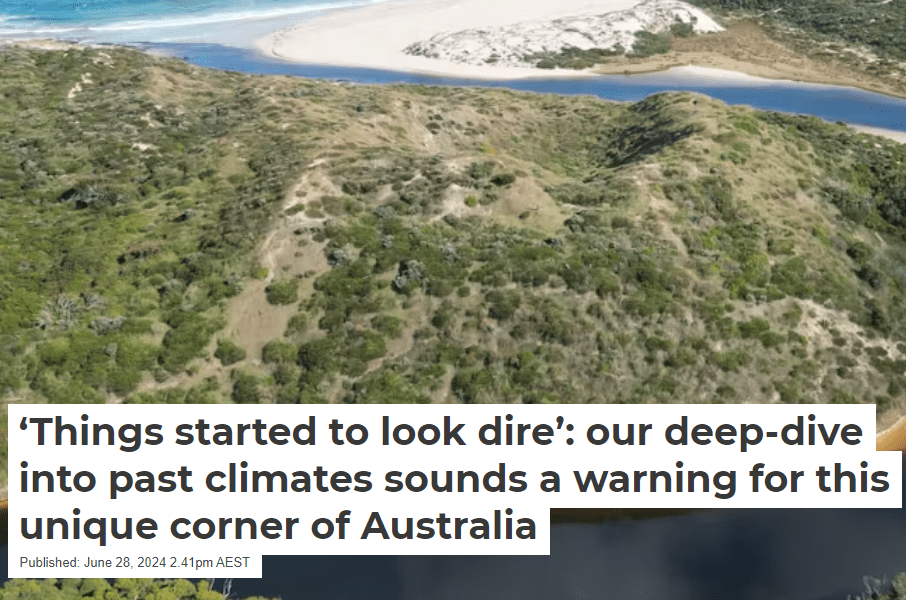
But what might be one of the biggest sci-comm highlights from the work (so far, anyway!) has been publishing an article about the research in The Conversation, which came out earlier today. It provides not only a simplified summary of the work, but highlights some of the ongoing conservation actions my collaborators are doing for freshwater fishes in the region. As we’ve seen before, there are a lot of challenges around getting support for freshwater conservation – both in the scale of threats and availability of support – so their work is incredibly important and inspirational.
Publishing this work by no means signifies the end of the “Fish Years” for me, so I’m hoping to continue working in this space going forward!
 The G-cat